
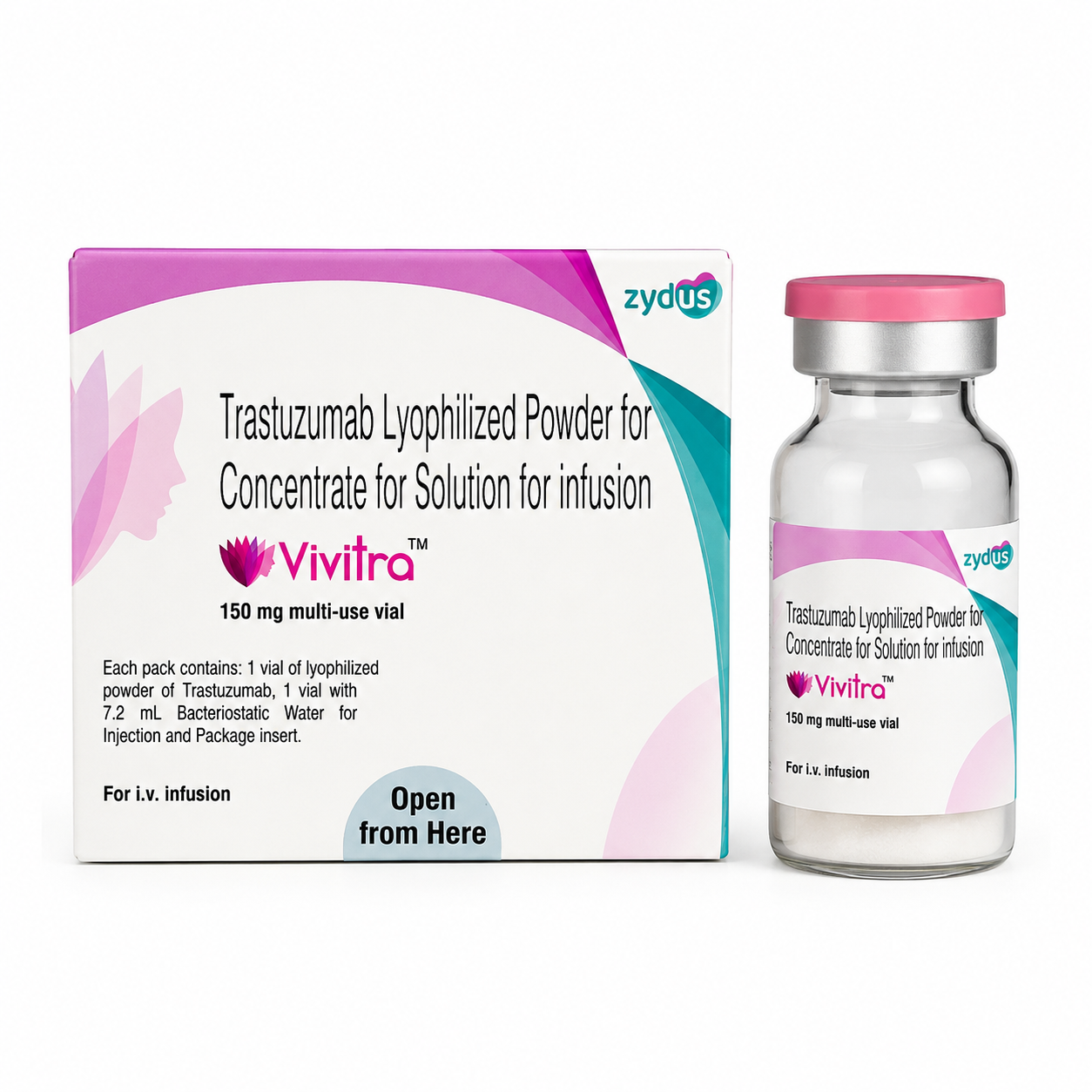
What is Vivitra 150 mg Injection?
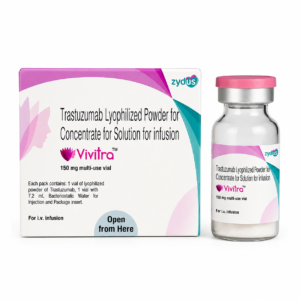
Vivitra 150 mg Injection is a prescription anti-cancer medicine that contains Trastuzumab 150 mg as its active ingredient. It is supplied as a lyophilized powder for concentrate for solution for infusion and is manufactured by Zydus Lifesciences.
Trastuzumab belongs to a class of medicines known as monoclonal antibodies. It is specifically designed to target cancers that produce excessive amounts of a protein called HER2 (Human Epidermal Growth Factor Receptor 2). HER2-positive cancers tend to grow and spread more rapidly than HER2-negative cancers.
Vivitra works by attaching to HER2 receptors on cancer cells, helping slow or stop their growth. It also enables the body’s immune system to recognize and destroy these cancer cells more effectively.
Doctors commonly prescribe Vivitra 150 mg Injection for the treatment of certain HER2-positive breast cancers and HER2-positive gastric (stomach) cancers. Depending on the patient’s condition, it may be used alone or in combination with chemotherapy or other targeted therapies.
Manufactured by Zydus Lifesciences, Vivitra is intended for administration only by qualified healthcare professionals in a hospital or specialized medical facility.
Vivitra should always be used under the supervision of an experienced oncologist. Self-medication or unsupervised use is not recommended.
Uses of Vivitra 150 mg Injection
Vivitra is prescribed for the treatment and management of HER2-positive cancers after appropriate diagnostic testing.
Common Medical Uses
- Treatment of HER2-positive early breast cancer
- Treatment of HER2-positive metastatic breast cancer
- Management of HER2-positive metastatic gastric cancer
- Combination therapy with chemotherapy for eligible patients
- Adjuvant therapy following breast cancer surgery
- Neoadjuvant treatment before surgery in selected patients
This medicine should only be taken under the supervision of a qualified healthcare professional.
Benefits of Vivitra 150 mg Injection
Vivitra provides targeted treatment against HER2-positive cancer cells, making it an important option in modern oncology.
Benefits include:
- Specifically targets HER2-positive cancer cells
- Helps slow cancer growth
- May reduce disease progression
- Supports long-term cancer management
- Can improve treatment outcomes when combined with chemotherapy
- Helps preserve healthy cells better than many conventional chemotherapy drugs
- May improve overall quality of life in eligible patients
- Reduces the risk of cancer recurrence in certain early breast cancer patients when used appropriately
Although Vivitra is highly effective for many patients, it is not a cure and treatment outcomes vary from person to person.
How Does Vivitra 150 mg Injection Work?
The active ingredient Trastuzumab is a targeted monoclonal antibody.
HER2 proteins are found on the surface of certain cancer cells. When these proteins are overproduced, they stimulate uncontrolled cancer growth.
Vivitra works by:
- Attaching specifically to HER2 receptors
- Blocking growth signals that encourage cancer cell multiplication
- Activating the body’s immune system to destroy cancer cells
- Slowing or stopping tumour growth
- Enhancing the effectiveness of some chemotherapy medicines
Because it targets HER2-positive cells, testing for HER2 status is required before treatment begins.
How to Take Vivitra 150 mg Injection
Vivitra is not a self-administered medicine.
General guidance includes:
- Administered by intravenous (IV) infusion only.
- Given by trained healthcare professionals.
- Treatment schedule depends on your cancer type and treatment plan.
- Attend all scheduled infusion appointments.
- Do not miss doses unless advised by your oncologist.
- Never change or stop treatment without medical advice.
- Your doctor may monitor heart function and overall health during therapy.
Side Effects of Vivitra 150 mg Injection
Like all medicines, Vivitra 150 mg Injection may cause side effects, although not everyone experiences them.
Common Side Effects
- Fever
- Chills
- Fatigue
- Nausea
- Vomiting
- Diarrhea
- Headache
- Muscle pain
- Joint pain
- Mild infusion-related reactions
- Cough
Serious Side Effects
Seek immediate medical attention if you experience:
- Difficulty breathing
- Severe allergic reactions
- Chest pain
- Irregular heartbeat
- Heart failure symptoms
- Swelling of legs
- Persistent cough
- Severe lung problems
- Serious infusion reactions
- High fever with infection symptoms
If side effects persist or become severe, contact your healthcare provider promptly.
Warnings and Precautions
Before starting Vivitra, tell your doctor if you have:
Heart Disease
Trastuzumab may affect heart function. Regular cardiac monitoring is recommended.
Pregnancy
Vivitra may harm an unborn baby. Effective contraception should be used during treatment and for the period advised by your doctor after completing therapy.
Breastfeeding
Breastfeeding is generally not recommended during treatment and for a period after the final dose. Consult your healthcare provider.
Liver Disease
Use with caution if you have liver impairment.
Kidney Disease
Inform your doctor about any kidney problems before treatment.
Elderly Patients
Older adults may require closer monitoring.
Allergies
Do not use if you have experienced a serious allergic reaction to trastuzumab or any component of the medicine.
Driving
Some patients may experience dizziness or infusion-related symptoms. Avoid driving or operating machinery until you know how the medicine affects you.
Alcohol
Discuss alcohol consumption with your treating physician, as it may affect your overall treatment plan.
Drug Interactions
Vivitra may interact with other medicines and cancer treatments.
Inform your doctor if you take:
- Prescription medicines
- Over-the-counter medications
- Chemotherapy drugs
- Targeted cancer therapies
- Herbal supplements
- Vitamins
- Immunosuppressive medicines
Always provide your healthcare team with a complete list of all medicines you are using.
Storage Instructions
Vivitra should be stored according to the manufacturer’s recommendations.
General storage advice includes:
- Store refrigerated at the recommended temperature (typically 2°C to 8°C, unless otherwise instructed).
- Do not freeze.
- Keep the vial in its original carton to protect it from light.
- Reconstituted solution should be used or stored only as directed by healthcare professionals.
- Keep out of reach of children.
- Do not use after the expiry date.
Disclaimer
This information is provided for educational purposes only and should not be considered medical advice. Vivitra 150 mg Injection is a prescription medicine that must be used under the supervision of a qualified healthcare professional. Do not self-medicate or change your treatment without consulting your doctor. Individual responses to treatment may vary based on medical condition and overall health.
Frequently Asked Questions (FAQs)
1. What is Vivitra 150 mg Injection used for?
Vivitra is used to treat HER2-positive breast cancer and HER2-positive gastric cancer. It may be used alone or together with chemotherapy depending on your treatment plan.
2. How does Vivitra work?
Vivitra contains trastuzumab, a monoclonal antibody that targets HER2 proteins on cancer cells, helping slow their growth and enabling the immune system to attack them.
3. Is Vivitra chemotherapy?
No. Vivitra is a targeted therapy (monoclonal antibody), not a traditional chemotherapy medicine, although it is often used alongside chemotherapy.
4. Can Vivitra be taken long term?
Yes. The duration depends on your diagnosis, treatment response, and your oncologist’s recommendations.
5. What happens if I miss an infusion?
Contact your oncology team immediately. They will arrange another appointment and advise on the appropriate schedule.
6. Can I stop Vivitra suddenly?
Do not stop treatment without consulting your doctor, as this may affect the effectiveness of your cancer treatment.
7. Can Vivitra be taken with food?
Since Vivitra is given by intravenous infusion, food does not directly affect its administration. Follow your healthcare provider’s instructions regarding meals before treatment.
8. What are the common side effects of Vivitra?
Common side effects include fever, chills, nausea, fatigue, diarrhea, headache, muscle pain, and infusion-related reactions.
9. Who should avoid Vivitra?
Patients with severe hypersensitivity to trastuzumab or those for whom their doctor determines the risks outweigh the benefits should avoid using this medicine.
10. How should Vivitra be stored?
It should be stored under refrigeration (2°C–8°C), protected from light, and handled by healthcare professionals according to the manufacturer’s instructions.
Reviews
There are no reviews yet.