
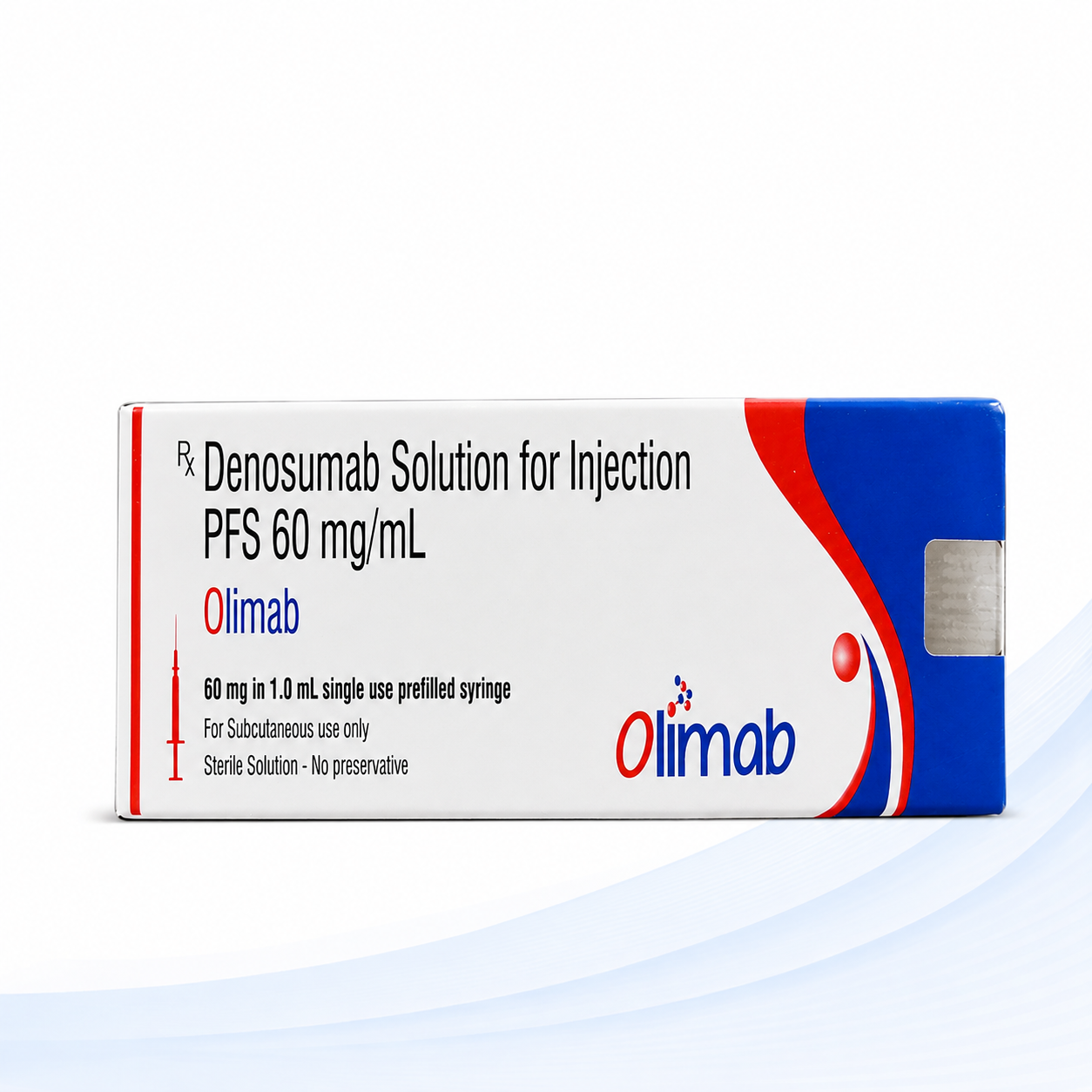
What is Olimab?
Olimab is a prescription medicine containing Denosumab 60 mg/mL, a monoclonal antibody used to treat certain bone disorders. It belongs to a class of medicines known as RANK ligand (RANKL) inhibitors, which help reduce bone loss and improve bone strength.
Manufactured by Intas Pharmaceuticals Ltd., Olimab is supplied as a single-use prefilled syringe intended for subcutaneous (under the skin) injection. It is commonly prescribed for patients at high risk of fractures due to osteoporosis or bone loss associated with specific medical conditions.
Denosumab works by blocking the activity of a protein called RANKL, which is responsible for activating cells that break down bone (osteoclasts). By reducing the activity of these cells, Olimab helps maintain bone density and lowers the risk of fractures.
Doctors may prescribe Olimab for adults with osteoporosis, bone loss caused by hormone therapies, or other approved conditions where strengthening bones is important.
Because this medicine affects bone metabolism and the immune system, Olimab should only be used under the supervision of a qualified healthcare professional.
Uses of Olimab
Olimab is prescribed for several medically approved conditions involving bone loss and fracture prevention.
Common uses include:
- Treatment of osteoporosis in postmenopausal women at high risk of fractures
- Treatment of osteoporosis in men at increased risk of fractures
- Management of bone loss associated with hormone therapy for breast cancer
- Management of bone loss associated with androgen deprivation therapy for prostate cancer
- Increasing bone mass in selected high-risk patients as recommended by a physician
- Prevention of osteoporotic fractures in appropriate patients
This medicine should only be taken under the supervision of a qualified healthcare professional.
Benefits of Olimab
Olimab helps improve bone health by slowing excessive bone breakdown. When used appropriately, it may offer several important benefits.
Benefits include:
- Helps increase bone mineral density
- Reduces the risk of spine, hip, and other fractures in eligible patients
- Slows ongoing bone loss
- Supports long-term osteoporosis management
- Helps maintain stronger bones with continued treatment
- Improves mobility and daily functioning by reducing fracture risk
- Convenient prefilled syringe for scheduled administration
While Olimab is highly effective in appropriate patients, it is not a cure for osteoporosis and should be used alongside adequate calcium, vitamin D intake, exercise, and other lifestyle recommendations advised by your healthcare provider.
How Does Olimab Work?
Denosumab is a targeted monoclonal antibody that blocks a protein called RANK Ligand (RANKL).
Normally, RANKL activates specialized bone cells known as osteoclasts, which break down old bone tissue. In osteoporosis and certain other conditions, osteoclast activity becomes excessive, leading to weak and fragile bones.
By blocking RANKL, Olimab:
- Reduces the formation of osteoclasts
- Decreases bone resorption (bone breakdown)
- Allows bone-building cells to work more effectively
- Improves bone strength over time
- Lowers the likelihood of fractures
Because bone remodeling is a gradual process, the benefits of treatment develop over several months with regular use as prescribed.
How to Take Olimab
Olimab is administered only as a subcutaneous injection by a healthcare professional or by trained patients/caregivers when appropriate.
General guidance:
- Use exactly as prescribed by your doctor.
- It is administered under the skin, commonly in the upper arm, thigh, or abdomen.
- Follow your scheduled injection appointments carefully.
- Do not miss doses.
- Never change the treatment schedule without medical advice.
- Your doctor may recommend calcium and vitamin D supplements during treatment.
- Regular monitoring of calcium levels and bone health may be required.
Side Effects of Olimab
Like all medicines, Olimab may cause side effects, although not everyone experiences them.
Common Side Effects
- Back pain
- Muscle pain
- Joint pain
- Pain in the arms or legs
- Mild injection site reactions
- High cholesterol levels
- Urinary tract infection
- Mild skin rash
Serious Side Effects
Seek immediate medical attention if you experience:
- Severe allergic reactions
- Low blood calcium (hypocalcemia)
- Serious skin infections (cellulitis)
- Persistent jaw pain or dental problems (possible osteonecrosis of the jaw)
- Unusual thigh or groin pain (possible atypical femur fracture)
- Severe bone, joint, or muscle pain
- Signs of serious infection
If side effects persist or become severe, contact your healthcare provider promptly.
Warnings and Precautions
Before receiving Olimab, inform your doctor if you have:
- Low calcium levels
- Kidney disease (especially severe kidney impairment)
- History of thyroid or parathyroid surgery
- Dental disease or planned dental procedures
- Poor oral hygiene
- Allergies to Denosumab or any ingredients
Pregnancy
Olimab is generally not recommended during pregnancy unless the potential benefits outweigh the risks. Consult your physician.
Breastfeeding
Discuss breastfeeding with your healthcare provider before starting treatment.
Elderly Patients
Frequently prescribed in older adults but requires regular monitoring.
Liver Disease
No major dose adjustment is generally required, but medical evaluation is recommended.
Alcohol
No specific interaction is established; however, excessive alcohol consumption may negatively affect bone health.
Driving and Operating Machinery
Olimab is not generally expected to impair driving ability, although patients experiencing dizziness or fatigue should exercise caution.
Drug Interactions
Olimab may interact with certain medicines or supplements.
Tell your doctor if you take:
- Prescription medicines
- Over-the-counter medicines
- Calcium supplements
- Vitamin D supplements
- Corticosteroids
- Immunosuppressive medicines
- Herbal supplements
- Vitamins
Your healthcare provider will determine whether any adjustments or monitoring are necessary.
Storage Instructions
- Store refrigerated at 2°C to 8°C.
- Do not freeze.
- Keep in the original carton to protect from light.
- Do not shake the syringe.
- Keep out of reach of children.
- Do not use after the expiry date.
- Follow all storage instructions provided by the manufacturer.
Disclaimer
This information is intended for educational purposes only and should not be considered medical advice. Olimab is a prescription medicine and should only be used under the supervision of a qualified healthcare professional. Do not self-medicate or alter your prescribed treatment without consulting your doctor. Individual responses to treatment may vary.
Frequently Asked Questions (FAQs)
1. What is Olimab used for?
Olimab is used to treat osteoporosis and other approved conditions involving bone loss. It helps strengthen bones and reduce the risk of fractures in eligible patients.
2. How does Olimab work?
It contains Denosumab, which blocks RANKL, reducing the activity of bone-resorbing cells and helping preserve bone density and strength.
3. Is Olimab safe?
When prescribed appropriately and monitored by a healthcare professional, Olimab is considered safe for most eligible patients. Regular follow-up is important.
4. Can Olimab be used long term?
Some patients may require long-term treatment. Your doctor will periodically evaluate the benefits and risks to determine the appropriate duration.
5. What happens if I miss an injection?
Contact your healthcare provider as soon as possible to reschedule. Do not double doses or change the schedule without medical advice.
6. Can I stop taking Olimab suddenly?
No. Stopping treatment without medical guidance may increase the risk of rapid bone loss and fractures. Always consult your doctor before discontinuing therapy.
7. Can Olimab be taken with food?
Yes. Because it is given by injection, food does not affect its action. Maintaining adequate calcium and vitamin D intake is important during treatment.
8. What are the common side effects of Olimab?
Common side effects include back pain, muscle pain, joint pain, injection-site reactions, mild skin rash, and urinary tract infections.
9. Who should avoid Olimab?
Patients with untreated hypocalcemia, known allergy to Denosumab, or certain serious medical conditions should avoid the medicine unless specifically advised by their healthcare provider.
10. How should Olimab be stored?
Store the prefilled syringe in a refrigerator at 2°C–8°C, protect it from light, do not freeze or shake it, and keep it out of the reach of children.


Reviews
There are no reviews yet.