
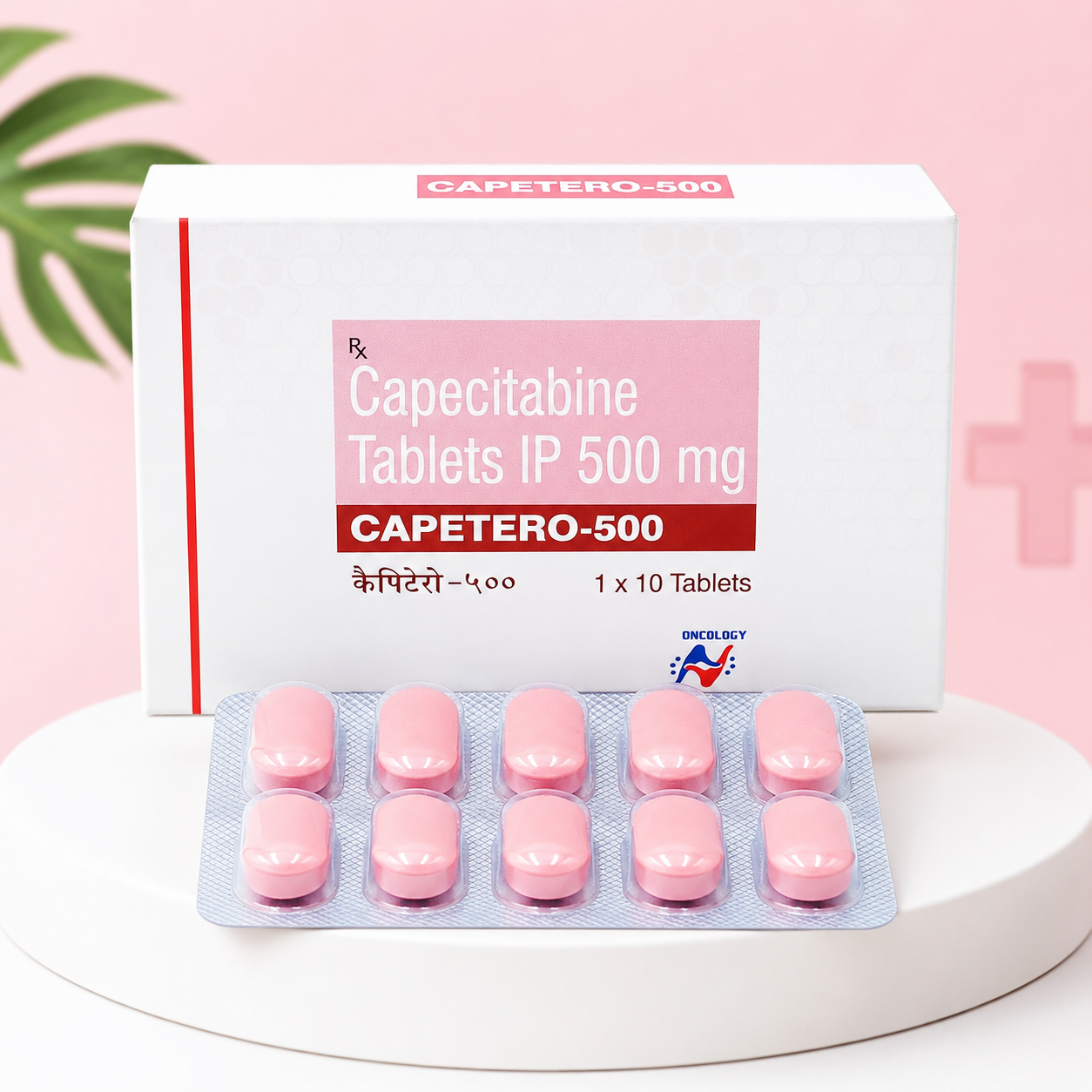
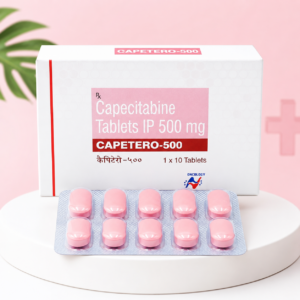
What is Capetero-500?
Capetero-500 Tablet is a prescription anti-cancer medicine containing Capecitabine 500 mg as its active ingredient. Capecitabine belongs to a class of medicines known as antimetabolite chemotherapy drugs (fluoropyrimidines). It is widely prescribed by oncologists for the treatment of several types of cancer, either alone or in combination with other cancer therapies.
Once taken by mouth, Capecitabine is converted inside the body into 5-fluorouracil (5-FU), an active chemotherapy medicine. This active compound interferes with the DNA production of rapidly growing cancer cells, slowing or stopping their growth.
Doctors commonly prescribe Capetero-500 medicine for patients with:
- Colorectal cancer
- Breast cancer
- Gastric (stomach) cancer
- Certain other cancers as determined by an oncologist
The medicine offers the convenience of oral chemotherapy, allowing many patients to receive treatment at home while remaining under regular medical supervision.
The manufacturer markets this medicine for oncology use. However, Capetero-500 should only be used under the supervision of a qualified oncologist or healthcare professional, as chemotherapy requires careful monitoring to ensure safety and effectiveness.
Uses of Capetero-500
Capetero-500 contains Capecitabine, an established chemotherapy medicine used in oncology. Depending on the patient’s condition, it may be prescribed alone or alongside other cancer treatments.
Common medical uses include:
- Treatment of colorectal cancer
- Management of metastatic colorectal cancer
- Treatment of breast cancer after other therapies when appropriate
- Management of metastatic breast cancer
- Treatment of gastric (stomach) cancer in combination with other chemotherapy medicines
- Supportive chemotherapy as recommended by an oncologist
- Part of combination cancer treatment protocols
This medicine should only be taken under the supervision of a qualified healthcare professional.
Benefits of Capetero-500
Capetero-500 plays an important role in modern cancer treatment by helping control the growth and spread of cancer cells.
Potential benefits include:
- Helps slow cancer cell growth
- Supports treatment of multiple cancers
- Provides oral chemotherapy, reducing the need for frequent injections
- May improve disease control when combined with other cancer medicines
- Helps improve quality of life in suitable patients
- Supports long-term cancer management under specialist care
- May help reduce cancer progression where clinically appropriate
Individual treatment outcomes vary depending on cancer type, stage, and overall health. Capetero-500 is intended to help manage cancer and should not be considered a guaranteed cure.
How Does Capetero-500 Work?
Capetero-500 contains Capecitabine, which is an inactive medicine until it enters the body.
After absorption, Capecitabine is converted through several metabolic steps into 5-fluorouracil (5-FU). This active substance blocks enzymes that cancer cells need to produce DNA and RNA. Without these essential building blocks, cancer cells cannot grow or divide effectively.
Because cancer cells divide much faster than most normal cells, they are more sensitive to the effects of chemotherapy. This helps slow tumor growth and, in some cases, shrink tumors. Healthy cells may also be affected, which explains why chemotherapy can cause side effects.
How to Take Capetero-500
Always follow your doctor’s instructions carefully.
General guidance includes:
- Take exactly as prescribed.
- Capecitabine is commonly taken within 30 minutes after a meal, as directed by your healthcare provider.
- Swallow the tablet whole with water.
- Do not crush, split, or chew the tablet unless your doctor advises otherwise.
- Take doses at the same times each day if prescribed on a schedule.
- If you miss a dose, contact your healthcare provider for advice rather than doubling the next dose.
- Never change your treatment schedule without consulting your oncologist.
The appropriate Capetero-500 dosage depends on body surface area, cancer type, kidney function, and treatment protocol.
Side Effects of Capetero-500
Like all medicines, Capetero-500 may cause side effects, although not everyone experiences them.
Common Side Effects
- Nausea
- Vomiting
- Diarrhea
- Loss of appetite
- Fatigue
- Weakness
- Mouth sores
- Hand-foot syndrome (redness, swelling, or pain of hands and feet)
- Mild abdominal pain
- Skin rash
Serious Side Effects
Seek immediate medical attention if you experience:
- Severe diarrhea
- High fever or signs of infection
- Chest pain
- Difficulty breathing
- Severe allergic reactions
- Unusual bleeding or bruising
- Severe dehydration
- Persistent vomiting
- Severe skin reactions
- Extreme weakness
If side effects persist or become severe, contact your healthcare provider promptly.
Warnings and Precautions
Before taking Capetero-500, discuss your complete medical history with your doctor.
Pregnancy
Capecitabine may harm an unborn baby. Effective contraception is recommended during treatment and for the period advised by your doctor.
Breastfeeding
Breastfeeding is generally not recommended while receiving Capecitabine treatment.
Kidney Disease
Dose adjustments may be required in patients with impaired kidney function.
Liver Disease
Patients with liver problems should be closely monitored during treatment.
Heart Disease
Capecitabine may rarely affect the heart. Inform your doctor if you have a history of heart disease or chest pain.
Elderly Patients
Older adults may be more likely to experience certain side effects and may require closer monitoring.
Alcohol
Ask your healthcare provider whether alcohol is appropriate during treatment, as it may worsen some side effects.
Driving and Operating Machinery
Avoid driving or operating machinery if you experience dizziness, weakness, or fatigue.
Allergies
Do not take this medicine if you are allergic to Capecitabine, fluorouracil, or any tablet ingredients.
Drug Interactions
Capetero-500 may interact with other medicines, potentially affecting its safety or effectiveness.
Examples include:
- Blood thinners such as warfarin
- Phenytoin
- Leucovorin
- Certain chemotherapy medicines
- Medicines affecting bone marrow function
- Some antiviral medicines
Always inform your doctor about:
- Prescription medicines
- Over-the-counter medicines
- Herbal supplements
- Vitamins
- Nutritional products
Never start or stop medicines without medical advice while undergoing chemotherapy.
Storage Instructions
Follow these storage recommendations:
- Store at room temperature according to the product label.
- Keep away from excessive heat and direct sunlight.
- Protect from moisture.
- Store in the original packaging.
- Keep out of reach of children and pets.
- Do not use after the expiry date.
- Dispose of unused tablets according to local pharmaceutical disposal guidelines.
Disclaimer
The information provided above is intended for educational purposes only and should not be considered medical advice. Capetero-500 is a prescription chemotherapy medicine that should only be used under the guidance of a qualified healthcare professional. Do not self-medicate or change your prescribed treatment without consulting your doctor. Individual responses to treatment may vary based on medical condition and overall health.
Frequently Asked Questions (FAQs)
1. What is Capetero-500 used for?
Capetero-500 is primarily used to treat colorectal cancer, breast cancer, and gastric cancer. Your oncologist may prescribe it alone or in combination with other chemotherapy medicines depending on your treatment plan.
2. How does Capetero-500 work?
It contains Capecitabine, which is converted inside the body into 5-fluorouracil (5-FU). This active medicine interferes with DNA production in rapidly dividing cancer cells, helping slow or stop their growth.
3. Is Capetero-500 safe?
When used under the supervision of an experienced oncologist, Capetero-500 is an established and widely used chemotherapy medicine. Regular blood tests and medical monitoring help improve treatment safety.
4. Can Capetero-500 be taken for a long time?
Treatment duration depends on your cancer type, treatment response, and tolerance. Your oncologist will determine how long therapy should continue.
5. What happens if I miss a dose?
Do not take an extra dose to make up for the missed one. Contact your healthcare provider for advice and follow the treatment schedule recommended by your doctor.
6. Can I stop taking Capetero-500 suddenly?
No. Chemotherapy should only be stopped or changed after consulting your treating oncologist, as interruptions may affect treatment outcomes.
7. Can Capetero-500 be taken with food?
Yes. Capecitabine is generally recommended to be taken within 30 minutes after a meal, unless your healthcare provider instructs otherwise.
8. What are the common Capetero-500 side effects?
Common side effects include nausea, diarrhea, fatigue, mouth sores, loss of appetite, and hand-foot syndrome. Not everyone experiences these effects.
9. Who should avoid Capetero-500?
People with known allergy to Capecitabine, severe kidney impairment (unless specifically advised), or certain metabolic disorders (such as complete DPD deficiency) may not be suitable candidates. Your doctor will assess whether this medicine is appropriate for you.
10. How should Capetero-500 be stored?
Store the tablets in their original package at the recommended room temperature, protected from moisture and sunlight, and keep them out of the reach of children.
Reviews
There are no reviews yet.