
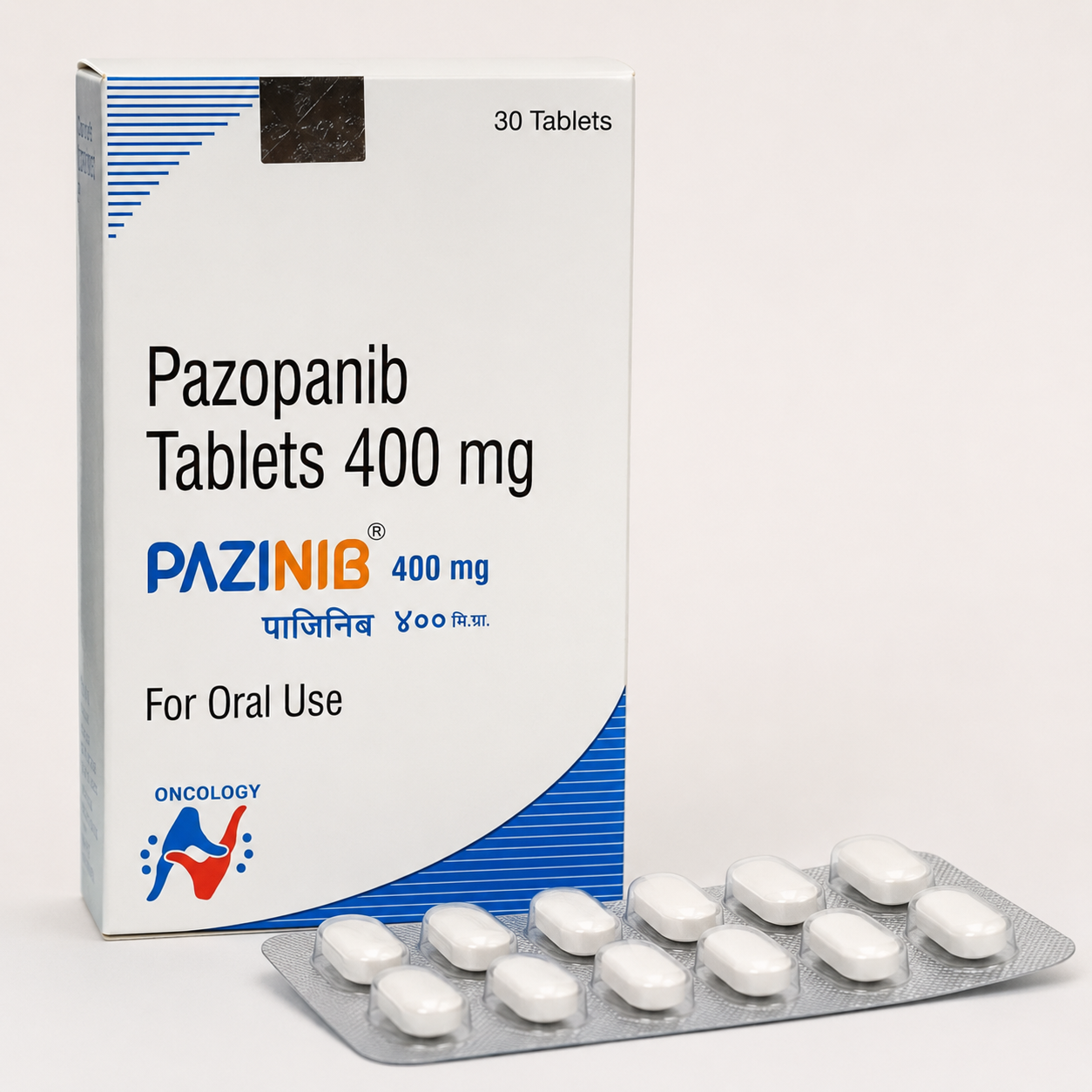
1. What is Pazinib 400 mg Tablet?
Pazinib 400 mg Tablet contains pazopanib, an anticancer medicine belonging to a group of medicines called tyrosine kinase inhibitors (TKIs). Pazopanib works by blocking certain proteins involved in the growth of cancer cells and the formation of new blood vessels that supply tumors.
Pazopanib is used in adults for certain advanced cancers, particularly advanced renal cell carcinoma (RCC), a type of kidney cancer. It is also used for advanced soft tissue sarcoma (STS) in adults who have previously received chemotherapy. The approved indications can vary by country and product labeling, so treatment decisions should be made by an oncology specialist.
Pazopanib inhibits several signaling pathways, including vascular endothelial growth factor receptors (VEGFRs), platelet-derived growth factor receptors (PDGFRs), and other kinases involved in tumor development. By interfering with these pathways, the medicine can slow processes that support cancer growth and blood-vessel formation.
Pazinib 400 mg should be used only when prescribed by a qualified healthcare professional. The 400 mg strength does not by itself indicate the appropriate dose for every patient; the required dose may depend on the cancer being treated, liver function, side effects, and other medicines being taken.
2. Uses of Pazinib 400 mg Tablet
Pazopanib is a prescription anticancer medicine used for specific cancer indications.
Common medically accepted uses include:
- Treatment of advanced renal cell carcinoma (RCC) in adults.
- Treatment of advanced soft tissue sarcoma (STS) in adults who have previously received chemotherapy.
- Management of certain advanced cancers when pazopanib is considered appropriate by an oncology specialist.
Pazopanib is not appropriate for every type of cancer. For example, the U.S. prescribing information states that its effectiveness has not been demonstrated for adipocytic soft tissue sarcoma or gastrointestinal stromal tumors.
This medicine should only be taken under the supervision of a qualified healthcare professional.
3. Benefits of Pazinib 400 mg Tablet
Pazinib 400 mg may provide therapeutic benefits when it is appropriately prescribed as part of cancer treatment.
Potential benefits include:
- Helps slow the progression of certain advanced cancers.
- Targets signaling pathways involved in tumor growth.
- Helps inhibit the formation of new blood vessels that tumors may require for growth.
- Can provide a targeted treatment option for certain advanced kidney cancers and soft tissue sarcomas.
- May support disease control when selected as appropriate by an oncologist.
Pazopanib is not a guaranteed cure for cancer. Its effectiveness varies according to the cancer type, stage, previous treatment, overall health, and individual response.
4. How Does Pazinib 400 mg Work?
Pazopanib is a multi-targeted tyrosine kinase inhibitor. Cancer cells and the tissues surrounding a tumor can use signaling proteins to promote cell growth and create new blood vessels.
Pazopanib blocks several kinase receptors, including VEGFR, PDGFR, and related signaling pathways. Blocking these pathways can reduce signals responsible for angiogenesis, which is the formation of new blood vessels. This may limit the supply of oxygen and nutrients available to a tumor and help slow cancer progression.
The medicine therefore works differently from conventional chemotherapy and is considered a targeted anticancer therapy.
5. How to Take Pazinib 400 mg Tablet
Pazinib 400 mg should be taken exactly as prescribed by your oncologist. Do not use the strength shown on the pack as a personal dosing recommendation.
General guidance includes:
- Take the medicine exactly according to your doctor’s prescription.
- Pazopanib tablets are generally taken without food, with the prescribed schedule.
- Swallow the tablet whole with water.
- Do not crush, split, or chew the tablet unless your healthcare professional specifically instructs you to do so.
- Do not change the dose or treatment schedule on your own.
- If you miss a dose, follow your doctor’s or pharmacist’s instructions rather than taking an extra dose.
The official prescribing information notes that crushing a pazopanib tablet can substantially increase drug exposure, which is why tablets should be swallowed whole.
Because pazopanib dosing can require modification for liver problems, side effects, and drug interactions, Pazinib 400 mg dosage should always be determined by the treating physician.
6. Side Effects of Pazinib 400 mg Tablet
Like all medicines, Pazinib 400 mg may cause side effects, although not everyone experiences them.
Common Side Effects
Depending on the indication and individual patient, possible side effects include:
- Diarrhea
- Nausea
- Vomiting
- Loss of appetite
- Tiredness or fatigue
- High blood pressure
- Changes in hair color
- Changes in taste
- Weight loss
- Headache
- Muscle or joint discomfort
- Skin or hair pigmentation changes
The frequency of adverse effects can differ between patients with renal cell carcinoma and those receiving treatment for soft tissue sarcoma.
Serious Side Effects
Pazopanib can cause potentially serious reactions. Seek urgent medical attention for symptoms that may indicate:
- Liver injury or significant liver-function abnormalities
- Severe or persistent high blood pressure
- Chest pain, breathlessness, or symptoms suggesting heart problems
- Unusual or significant bleeding
- Symptoms of blood clots
- Severe abdominal pain
- Serious breathing problems
- Neurological symptoms such as severe headache, confusion, seizures, or vision changes
Pazopanib carries an important warning regarding severe and potentially fatal liver toxicity, and liver-function monitoring is required during treatment.
If side effects persist or become severe, contact your healthcare provider promptly.
7. Warnings and Precautions
Before starting Pazinib 400 mg, tell your doctor about your complete medical history.
Liver Disease
Pazopanib can cause serious liver toxicity. Liver-function tests are generally required before and during treatment. Patients with significant hepatic impairment may require a lower dose or an alternative treatment.
Heart Disease
Tell your doctor if you have heart disease, heart failure, an irregular heartbeat, or a history of QT interval problems. Pazopanib may affect heart function and can prolong the QT interval in susceptible patients.
High Blood Pressure
Pazopanib may increase blood pressure. Blood pressure should be monitored during treatment.
Kidney Disease
Inform your healthcare professional about kidney problems. Your doctor will determine whether pazopanib is suitable for you and whether additional monitoring is needed.
Pregnancy
Pazopanib can cause fetal harm. Patients who are pregnant, planning pregnancy, or who could become pregnant should discuss appropriate precautions with their healthcare professional before treatment.
Breastfeeding
Breastfeeding is not recommended during treatment with pazopanib according to the U.S. prescribing information.
Surgery and Wound Healing
Pazopanib may interfere with wound healing. Tell your doctor if you are scheduled for surgery or have recently undergone an operation.
Driving
Fatigue, weakness, dizziness, or other treatment-related effects may affect some patients. Avoid driving or operating machinery if you feel impaired.
Alcohol
Discuss alcohol consumption with your healthcare team, particularly because pazopanib can affect the liver.
8. Drug Interactions
Pazopanib can interact with other medicines and may change their effects or increase the risk of adverse reactions.
Tell your doctor about:
- Prescription medicines
- Over-the-counter medicines
- Vitamins
- Herbal products
- Supplements
- Medicines for heart rhythm or blood pressure
- Cholesterol-lowering medicines
- Medicines that reduce stomach acid
Strong CYP3A4 inhibitors can increase pazopanib exposure, while strong CYP3A4 inducers can decrease its concentration. The prescribing information also warns about interactions involving P-glycoprotein/BCRP inhibitors, certain CYP substrates, simvastatin, stomach-acid-reducing medicines, and drugs that prolong the QT interval.
Never start or stop another medicine without informing your healthcare provider.
9. Storage Instructions
Store Pazinib 400 mg according to the storage conditions printed on the product packaging.
General precautions include:
- Keep the tablets in their original packaging.
- Protect them from excessive heat, direct sunlight, and moisture.
- Keep out of reach of children.
- Do not use tablets after the expiry date.
- Do not use damaged or improperly stored tablets.
- Dispose of unused medicine according to local pharmaceutical-waste guidance.
Always follow the storage instructions supplied with the specific product.
10. Pazinib 400 mg Price and Manufacturer
The Pazinib 400 mg price may vary depending on the supplier, location, pack size, taxes, and pharmacy. The provided image shows a pack containing 30 tablets, but the manufacturer information is not clearly readable from the visible portion of the packaging.
For accurate product details, including Pazinib 400 mg manufacturer, batch information, expiry date, and current price, verify the complete carton, package insert, or authorized pharmacy record.
As pazopanib is a prescription anticancer medicine, it should not be self-purchased or used without appropriate medical supervision.
11. Disclaimer
This Pazinib 400 mg product description is provided for educational and informational purposes only. It is not a substitute for medical advice, diagnosis, or treatment.
Pazopanib is a potent prescription anticancer medicine that requires appropriate patient selection, monitoring, and medical supervision. Do not self-medicate, alter the prescribed dose, discontinue treatment, or combine it with other medicines without consulting your oncologist or another qualified healthcare professional. Individual responses and side effects can vary.
12. Frequently Asked Questions
1. What is Pazinib 400 mg used for?
Pazinib 400 mg contains pazopanib, a targeted anticancer medicine. Pazopanib is approved for certain adults with advanced renal cell carcinoma and certain advanced soft tissue sarcomas following prior chemotherapy. The exact indication depends on the patient’s diagnosis and local prescribing information.
2. How does Pazinib 400 mg work?
Pazopanib blocks several tyrosine kinase receptors involved in tumor growth and blood-vessel formation. By interfering with pathways such as VEGFR and PDGFR signaling, it can help slow processes that support the growth and progression of certain cancers.
3. Is Pazinib 400 mg safe?
Pazopanib can be effective when appropriately prescribed, but it can also cause serious adverse effects, particularly liver toxicity, cardiovascular complications, bleeding, and high blood pressure. Regular medical monitoring is important. Safety depends on the individual’s health, cancer type, other medicines, and treatment plan.
4. Can Pazinib 400 mg be taken long term?
Treatment duration varies between patients. Pazopanib may be continued while it is controlling the cancer and the patient is tolerating treatment, but the oncologist may reduce, interrupt, or stop treatment because of disease progression, side effects, or changes in health.
5. What happens if I miss a dose of Pazinib?
Do not automatically take an additional tablet to compensate for a missed dose. Follow the instructions provided by your oncologist or pharmacist. The official prescribing information includes specific guidance based on how close the missed dose is to the next scheduled dose.
6. Can I stop Pazinib suddenly?
Do not stop Pazinib 400 mg without speaking with your oncologist. Cancer treatment decisions should be made by the treating team. Your doctor may temporarily interrupt treatment, reduce the dose, or permanently discontinue it if certain adverse reactions occur.
7. Can Pazinib 400 mg be taken with food?
Pazopanib is generally administered without food because food can substantially increase its exposure. The tablet should also be swallowed whole rather than crushed. Follow the exact administration instructions provided by your healthcare professional and the product information.
8. What are the common Pazinib 400 mg side effects?
Common adverse effects may include diarrhea, nausea, vomiting, reduced appetite, fatigue, high blood pressure, taste changes, hair-color changes, headache, and weight loss. The specific side effects and their frequency can vary depending on the cancer being treated and the individual patient.
9. Who should avoid Pazinib 400 mg?
Pazopanib may not be suitable for people with certain liver or heart conditions or those taking interacting medicines. Patients should tell their doctor about existing medical conditions, pregnancy, breastfeeding, planned surgery, and all medicines or supplements they use before starting treatment.
10. How should Pazinib 400 mg be stored?
Keep Pazinib 400 mg in its original packaging and follow the storage conditions printed on the pack. Protect the tablets from excessive heat, moisture, and direct sunlight, and keep them away from children. Do not use the medicine after its expiry date or if the packaging indicates that it has been damaged.


Reviews
There are no reviews yet.