
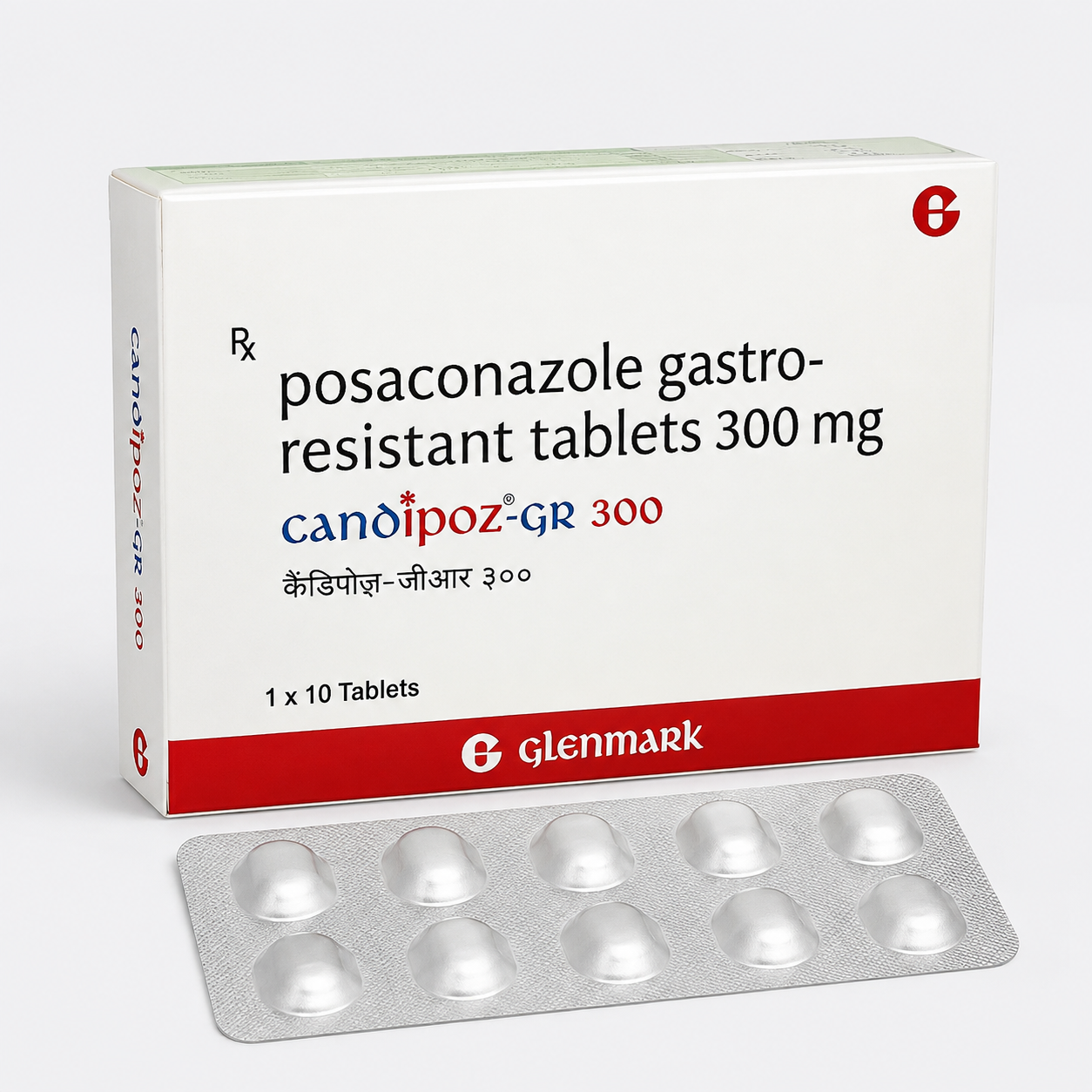
What Is Candipoz-GR 300?
Candipoz-GR 300 contains posaconazole, a broad-spectrum triazole antifungal agent. Unlike medicines intended for routine minor fungal problems, posaconazole is generally associated with the management or prevention of potentially serious invasive fungal infections in carefully selected patients.
The medicine works by interfering with the production of ergosterol, an essential component of fungal cell membranes. When ergosterol production is disrupted, fungal cells cannot maintain their normal structure and function. This antifungal activity helps healthcare professionals manage infections caused by susceptible fungi.
The gastro-resistant tablet formulation is designed to protect the medicine as it passes through the gastrointestinal tract. Posaconazole tablets have pharmacokinetic characteristics that differ from the oral suspension formulation, so these formulations should not be considered automatically interchangeable.
Candipoz-GR 300 Uses
Posaconazole gastro-resistant tablets may be prescribed by healthcare professionals for specific serious fungal conditions. Approved indications can vary according to the particular product, patient population, and regulatory authority.
Medical uses of posaconazole gastro-resistant tablets include:
- Treatment of invasive aspergillosis in appropriate patients.
- Treatment of selected difficult-to-treat fungal infections when other antifungal medicines have not been effective or cannot be tolerated.
- Management of certain infections caused by fungi such as Fusarium in appropriate clinical circumstances.
- Management of selected chromoblastomycosis and mycetoma cases.
- Management of selected coccidioidomycosis cases.
- Prevention of invasive fungal infections in certain high-risk patients, including some people undergoing intensive treatment for acute myeloid leukemia or myelodysplastic syndromes.
- Prevention of invasive fungal infections in certain hematopoietic stem-cell transplant recipients receiving intensive immunosuppressive therapy.
The exact indication depends on the patient’s diagnosis, immune status, previous treatment, and the clinical judgment of the treating specialist.
How Does Posaconazole Work?
Posaconazole belongs to the azole family of antifungal medicines. Fungi require ergosterol to maintain the integrity and normal function of their cell membranes.
Posaconazole interferes with fungal sterol production, reducing the availability of ergosterol. This weakens the fungal cell membrane and interferes with fungal growth and survival.
In simple terms, the medicine targets an important biological process that fungi need to maintain their cellular structure. This makes posaconazole useful against several clinically important fungal organisms.
Its activity and appropriate clinical use depend on the specific fungus involved and the patient’s medical circumstances. Therefore, laboratory findings, clinical assessment, and specialist judgment may be important when selecting antifungal treatment.
Benefits of Candipoz-GR 300
The potential clinical benefits of posaconazole are related to its antifungal activity rather than providing a general cure for all fungal infections.
Potential benefits in appropriate patients include:
- Providing antifungal activity against a range of susceptible fungi.
- Supporting treatment of certain serious invasive fungal infections.
- Providing an option when selected other antifungal treatments have failed or cannot be tolerated.
- Supporting prevention of invasive fungal infections in particular high-risk patient groups.
- Offering a gastro-resistant tablet formulation with predictable systemic exposure when used appropriately.
These benefits should always be considered alongside the patient’s individual medical condition and the potential risks associated with treatment.
Candipoz-GR 300 Side Effects
Like other prescription medicines, posaconazole can cause unwanted effects, although not every person experiences them.
Reported adverse effects associated with posaconazole include:
Commonly Reported Effects
Some patients may experience:
- Nausea
- Vomiting
- Diarrhea
- Headache
- Abdominal or gastrointestinal discomfort
- Fever
- Changes in certain blood or liver laboratory results
The frequency and severity of adverse effects can vary between patients.
Important Serious Reactions
Posaconazole can occasionally cause more significant reactions. Liver-related adverse effects are particularly important because elevations in liver enzymes and, rarely, severe hepatic injury have been reported. Allergic or hypersensitivity reactions can also occur.
The medicine may additionally affect cardiac electrical activity in susceptible individuals, particularly when combined with other medicines or conditions that increase the risk of QT prolongation. Electrolyte abnormalities involving potassium, magnesium, or calcium can also be clinically relevant.
Any unexpected or severe reaction should be discussed promptly with a healthcare professional.
Warnings and Precautions
Posaconazole requires careful consideration before and during treatment.
Liver Health
People with liver impairment may require particular medical attention because posaconazole exposure can be higher in some patients with hepatic impairment. Liver-related reactions have been reported during treatment.
Heart Rhythm
Posaconazole may be relevant to cardiac rhythm risk, particularly in people with certain existing rhythm problems or electrolyte disturbances. Healthcare professionals may consider relevant cardiac and laboratory factors before and during therapy.
Drug Interactions
One of the most important features of posaconazole is its potential to interact with many medicines. Posaconazole is a potent inhibitor of the CYP3A4 enzyme, which is involved in the metabolism of numerous drugs. As a result, it can substantially increase exposure to certain medicines.
Allergies
People with a known allergy to posaconazole or any ingredient in the formulation should inform their healthcare professional before treatment. Caution may also be appropriate in individuals with previous hypersensitivity to other azole antifungal medicines.
Pregnancy and Breastfeeding
Pregnancy and breastfeeding should be discussed with a qualified healthcare professional before any prescription antifungal treatment is considered. The potential benefits and risks need to be assessed individually.
Driving and Concentration
Some people receiving posaconazole may experience effects such as dizziness or sleepiness. Patients should follow professional advice regarding activities requiring alertness.
Drug Interactions
Posaconazole can interact with prescription medicines, over-the-counter products, and certain supplements.
Examples of medicines requiring particular attention include some:
- Immunosuppressants such as tacrolimus and sirolimus
- Certain benzodiazepines
- Some calcium-channel blockers
- Certain statins
- Some anticonvulsants
- Rifamycin-type medicines
- Certain medicines used in cancer treatment
- Some HIV medicines
- Other medicines metabolized through CYP3A4
This is not an exhaustive list. Patients should provide their healthcare professional with a complete list of prescription medicines, non-prescription medicines, vitamins, and herbal products they use.
Posaconazole Tablet Formulation
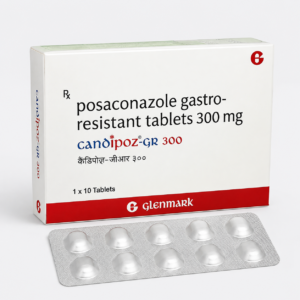
Candipoz-GR 300 is identified on the supplied packaging as a 300 mg gastro-resistant posaconazole tablet. Posaconazole gastro-resistant tablets are different from oral suspension formulations in their absorption and exposure characteristics. Official product information therefore emphasizes that tablet and oral suspension formulations should not be substituted for one another without appropriate medical direction.
The gastro-resistant formulation is intended to deliver posaconazole systemically after oral administration. The particular formulation, strength, and clinical regimen should be determined by the prescribing healthcare professional.
Storage Information
For storage, patients should follow the instructions printed on the product packaging and supplied by the dispensing pharmacy. Medicines should generally be protected from inappropriate environmental conditions and kept safely away from children.
Do not use a medicine after its expiry date, and do not use packaging that appears damaged or compromised without obtaining advice from a pharmacist or healthcare professional.
Candipoz-GR 300 Manufacturer
The package shown identifies Glenmark as the manufacturer of Candipoz-GR 300. The product packaging also identifies the active ingredient as posaconazole and the strength as 300 mg.
Product Summary
| Product Detail | Information |
|---|---|
| Brand Name | Candipoz-GR 300 |
| Active Ingredient | Posaconazole |
| Strength | 300 mg |
| Dosage Form | Gastro-resistant tablet |
| Drug Class | Triazole antifungal |
| Manufacturer shown on pack | Glenmark |
| Pack shown | 1 × 10 tablets |
Frequently Asked Questions
1. What is Candipoz-GR 300 used for?
Candipoz-GR 300 contains posaconazole, an antifungal medicine used under specialist medical supervision for selected serious fungal infections and prevention of invasive fungal infections in certain high-risk patients. The exact indication depends on the patient’s diagnosis and clinical circumstances.
2. What is the active ingredient in Candipoz-GR 300?
The active ingredient is posaconazole, a triazole antifungal medicine. The product shown contains posaconazole at a strength of 300 mg in a gastro-resistant tablet formulation.
3. How does posaconazole work?
Posaconazole interferes with the production of ergosterol, an essential component of fungal cell membranes. Disrupting this process affects the structure and function of susceptible fungal cells, providing antifungal activity.
4. Is Candipoz-GR 300 a prescription medicine?
Yes. Posaconazole is a prescription antifungal medicine requiring appropriate medical assessment and supervision. It is generally used in situations where specialist antifungal management is clinically appropriate.
5. What are the common side effects of posaconazole?
Reported adverse effects include gastrointestinal symptoms such as nausea, vomiting and diarrhea, as well as headache, fever and changes in laboratory tests. Liver-related abnormalities can also occur. Individual responses vary.
6. Can posaconazole interact with other medicines?
Yes. Posaconazole has significant interaction potential because it strongly inhibits CYP3A4 and can alter the concentrations of several other medicines. A healthcare professional should review all medicines, supplements, and herbal products before treatment.
7. Is posaconazole the same as other antifungal medicines?
No. Although posaconazole belongs to the azole antifungal family, individual antifungal medicines differ in their spectrum of activity, interactions, pharmacokinetics, and clinical indications. The appropriate medicine depends on the particular infection and patient.
8. Can the posaconazole tablet and oral suspension be substituted?
They should not be considered automatically interchangeable. Official product information notes important differences between the tablet and oral suspension formulations, including drug exposure. Formulation changes should therefore be handled by a healthcare professional.
9. Who should tell their doctor before using posaconazole?
Anyone with a history of medicine allergies, liver problems, heart-rhythm conditions, electrolyte abnormalities, or significant ongoing medication use should make sure their healthcare professional is aware. Pregnancy and breastfeeding should also be discussed before treatment.
10. What should I know about Candipoz-GR 300?
Candipoz-GR 300 is a posaconazole 300 mg gastro-resistant tablet identified on the supplied packaging as a Glenmark product. It is intended for medically supervised treatment or prevention of selected serious fungal infections. Because of its interaction profile and potential adverse effects, it should be used only according to professional medical advice.
Important Disclaimer
This product description is provided for general educational and informational purposes only. It is not a substitute for diagnosis, treatment, or individualized medical advice. Posaconazole is a prescription antifungal medicine with important potential drug interactions and safety considerations.
Do not self-medicate or make changes to prescription antifungal treatment based solely on information found online. A qualified healthcare professional should determine whether posaconazole is appropriate for an individual patient and should consider the patient’s diagnosis, other medicines, medical history, and relevant risk factors.
Individual responses to medicines can vary, and official indications or product information may differ between countries and formulations. Always refer to the approved product information and advice provided by the treating healthcare professional.

Reviews
There are no reviews yet.