
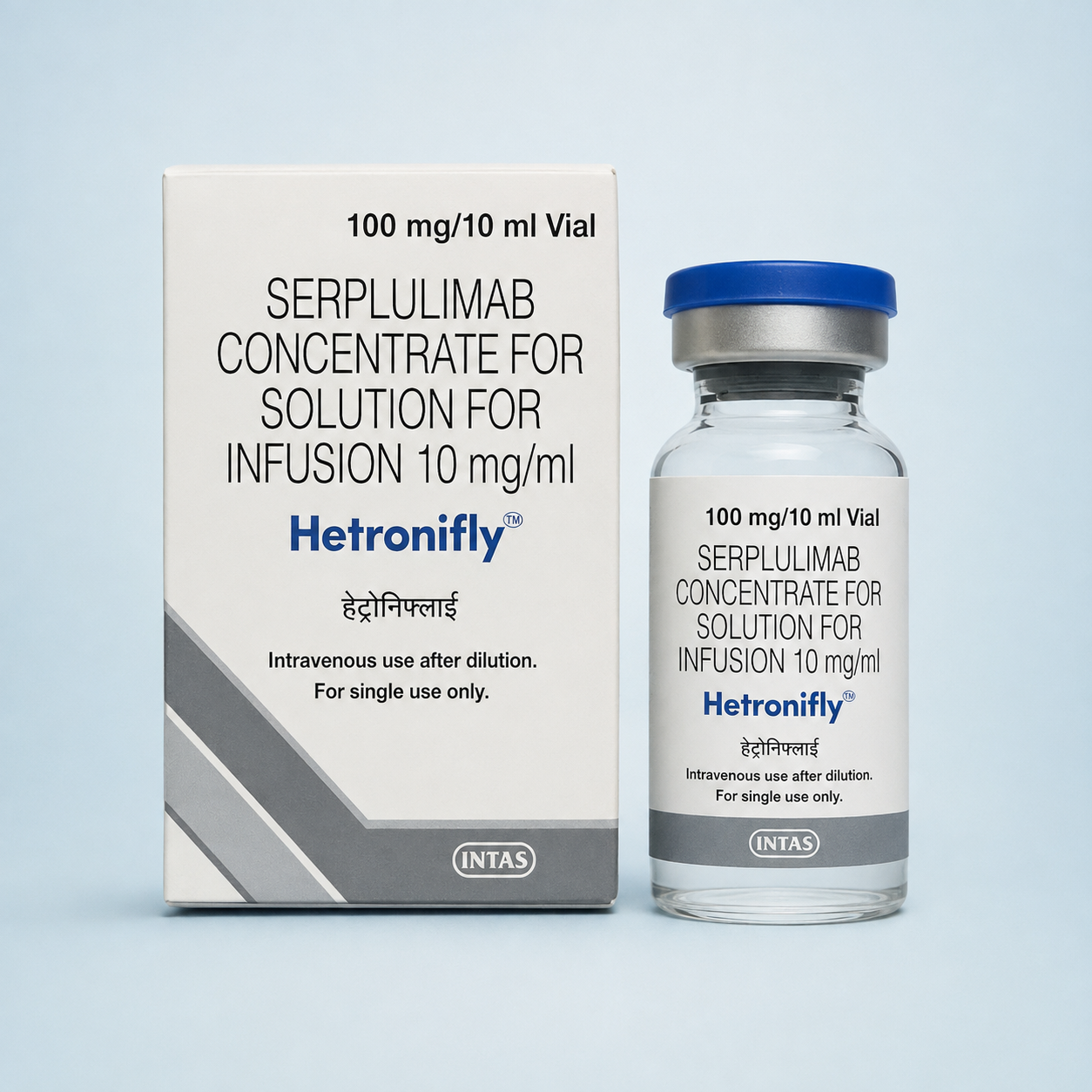
Hetronifly 100 mg/10 mL: Serplulimab Injection
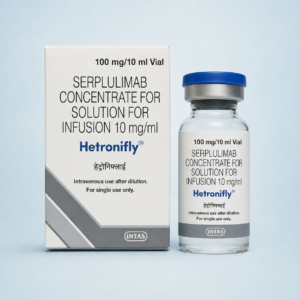
Hetronifly is a prescription cancer medicine containing serplulimab, a monoclonal antibody belonging to the immune checkpoint inhibitor class. The product shown is labelled as serplulimab concentrate for solution for infusion, 100 mg/10 mL (10 mg/mL). The pack identifies Intas Pharmaceuticals Ltd. as the company importing and marketing the product in India.
Serplulimab works by helping the body’s immune system recognize and respond to cancer cells. It is used as part of specialist cancer treatment for certain types of lung and oesophageal cancer, generally in combination with other anticancer medicines. Its use depends on the cancer type, stage, biomarker results, previous treatment history, and the treating oncologist’s assessment.
What is Hetronifly?
Hetronifly contains serplulimab, a humanized monoclonal antibody designed to target PD-1 (programmed cell death protein 1), an immune-system receptor found on certain T cells.
PD-1 is part of a natural immune-control system. Cancer cells can sometimes use the PD-1 pathway to reduce the immune system’s ability to recognize and attack them. Serplulimab blocks the interaction between PD-1 and its ligands, PD-L1 and PD-L2. This can restore or strengthen T-cell activity against tumour cells.
Hetronifly is classified as an antineoplastic monoclonal antibody and an immune checkpoint inhibitor. It is not a conventional chemotherapy drug. Instead, it works by modifying an immune pathway involved in the body’s response to cancer.
Current European regulatory information lists Hetronifly for specific adult cancer settings, including certain forms of extensive-stage small-cell lung cancer (SCLC), non-small-cell lung cancer (NSCLC), and oesophageal squamous cell carcinoma. Treatment decisions are made by an experienced oncology team.
Uses of Hetronifly
The medically recognized uses of serplulimab depend on the specific cancer diagnosis and applicable treatment guidelines.
Hetronifly may be used in combination with other anticancer medicines for:
- Extensive-stage small-cell lung cancer (ES-SCLC) in adults who have not previously received systemic treatment.
- Certain forms of non-squamous non-small-cell lung cancer (NSCLC) in adults, including locally advanced or metastatic disease in specified patients.
- Certain forms of squamous NSCLC, including unresectable, locally advanced, or metastatic disease.
- Certain cases of oesophageal squamous cell carcinoma, including unresectable, locally advanced, recurrent, or metastatic disease when the required tumour biomarker criteria are met.
The exact treatment combination and eligibility depend on the cancer type and individual clinical findings. This medicine should only be prescribed and supervised by a qualified oncology professional.
Benefits of Hetronifly
Hetronifly is an immunotherapy designed to help the immune system maintain its ability to recognize and attack cancer cells.
Potential clinical benefits may include:
- Supports immune-system activity against tumour cells.
- Blocks an important immune checkpoint pathway used by some cancers.
- Can form part of combination treatment for certain advanced cancers.
- Has demonstrated improvements in important cancer-treatment outcomes in clinical studies of particular patient groups.
- May help delay cancer progression in appropriate patients.
- May contribute to longer overall survival in specific approved treatment settings.
Clinical studies have demonstrated benefits of serplulimab-containing treatment in several cancer settings. For example, in a major study of previously untreated extensive-stage SCLC, serplulimab combined with chemotherapy improved median overall survival compared with chemotherapy alone. Benefits observed in clinical trials apply to the studied patient populations and should not be interpreted as a guarantee for an individual patient.
How Does Hetronifly Work?
The active ingredient, serplulimab, targets the PD-1 receptor on immune cells.
Normally, PD-1 helps prevent excessive immune activity. Cancer cells can exploit this pathway by interacting with PD-1 through PD-L1 or PD-L2. This interaction can reduce T-cell activity and allow cancer cells to escape immune recognition.
Serplulimab blocks PD-1, reducing this immune-suppressing signal. As a result, T cells may remain more active against tumour cells.
In simple terms, Hetronifly does not directly destroy cancer cells in the same way traditional chemotherapy does. Instead, it helps remove one of the biological “brakes” that can prevent the immune system from attacking cancer.
How is Hetronifly Given?
Hetronifly is a concentrate for solution for infusion and is not a tablet or medicine intended for self-administration.
Because it is an oncology immunotherapy, treatment is administered by appropriately trained healthcare professionals in a suitable medical setting. The treatment schedule, combination medicines, monitoring requirements, and treatment duration are determined by the treating oncologist.
Patients should never attempt to administer this medicine themselves or change their treatment schedule without medical advice. The official product information states that treatment should be started and monitored by doctors experienced in cancer treatment.
Hetronifly Side Effects
Like other immune checkpoint inhibitors, Hetronifly may cause side effects, although not everyone experiences them. Some adverse effects can result from immune-system activation against healthy tissues.
Common Side Effects
Depending on the treatment combination and cancer setting, reported adverse effects may include:
- Fatigue or weakness
- Nausea
- Reduced appetite
- Anaemia
- Reduced white blood cell or neutrophil counts
- Reduced platelet counts
- Hair loss when used with chemotherapy
- Changes in thyroid function
- Changes in blood electrolyte levels
- Skin reactions or rash
Some of these effects may also be caused by chemotherapy given alongside serplulimab, making medical assessment important.
Serious Side Effects
Immune checkpoint inhibitors can occasionally cause inflammation in healthy organs. Potentially serious immune-related reactions may involve:
- Lungs, causing pneumonitis
- Liver, causing hepatitis or abnormal liver tests
- Intestines, causing colitis and significant diarrhoea
- Thyroid or other endocrine glands
- Kidneys, causing nephritis or impaired kidney function
- Heart, causing myocarditis
- Nervous system
- Skin
Infusion-related or allergic reactions can also occur. Patients receiving immunotherapy should promptly report new or worsening symptoms to their oncology team.
If side effects persist or become severe, contact the treating healthcare provider promptly.
Warnings and Precautions
Hetronifly requires careful medical supervision because immune-related adverse reactions can sometimes affect organs away from the tumour.
Before treatment, patients should tell their doctor about:
- Previous allergic reactions to medicines or monoclonal antibodies.
- Existing autoimmune conditions.
- Liver problems.
- Kidney problems.
- Lung or breathing disorders.
- Heart conditions.
- Previous or current immune-related complications.
- Other cancer treatments being received.
- All prescription and non-prescription medicines being used.
Pregnancy and breastfeeding should also be discussed with the treating healthcare professional. The potential risks of immune checkpoint therapy must be assessed individually.
Patients should also discuss any new symptoms during or after treatment because some immune-related adverse reactions can occur during treatment or after treatment has ended.
Drug Interactions
Patients should provide their oncologist with a complete list of medicines and supplements they use.
This includes:
- Prescription medicines
- Over-the-counter medicines
- Vitamins
- Herbal products
- Other cancer treatments
- Medicines used for autoimmune or inflammatory conditions
The clinical significance of interactions can depend on the complete treatment regimen. Because Hetronifly is commonly used as part of combination cancer therapy, the oncology team should review the complete medication list before treatment.
Storage Information
Hetronifly is a specialist injectable medicine and should be stored and handled according to its approved product information and the requirements of the healthcare facility.
General precautions include:
- Keep the product in its original packaging as appropriate.
- Protect it from unsuitable environmental conditions.
- Follow the storage requirements stated in the approved package information.
- Do not use a vial if its appearance or packaging is compromised.
- Keep medicines away from children and unauthorized users.
- Do not use medicines beyond their expiry date.
The pack shown specifically advises referring to the package leaflet for storage conditions after dilution and states that the medicine should not be used if visible particles are noticed.
Hetronifly Price and Availability
The Hetronifly price can vary depending on the supplier, location, applicable taxes, healthcare setting, and other factors. Because this is a prescription oncology medicine, availability and supply should be confirmed through an appropriate healthcare provider or authorized pharmaceutical channel.
A product page should not be interpreted as an invitation to self-purchase or self-administer this medicine. Treatment decisions should remain with the patient’s oncologist.
Hetronifly Manufacturer
The packaging shown identifies Intas Pharmaceuticals Ltd. as the company importing and marketing the product in India. The label also indicates that the Hetronifly trademark belongs to Shanghai Henlius Biotech, Inc.
Product ownership, manufacturing, importation, and marketing roles can differ by country, so the current product packaging and regulatory information should be checked for the applicable market.
Frequently Asked Questions
1. What is Hetronifly used for?
Hetronifly contains serplulimab, an immune checkpoint inhibitor used in specific adult cancer-treatment settings. Current regulatory information includes certain forms of extensive-stage small-cell lung cancer, non-small-cell lung cancer, and oesophageal squamous cell carcinoma. Its suitability depends on the individual cancer diagnosis and clinical characteristics.
2. What is the active ingredient in Hetronifly?
The active ingredient is serplulimab. It is a humanized monoclonal antibody that targets the PD-1 immune checkpoint receptor. By blocking PD-1 signalling, it can help restore T-cell activity against tumour cells.
3. Is Hetronifly chemotherapy?
Hetronifly is not conventional chemotherapy. It is an immunotherapy and immune checkpoint inhibitor. However, it may be used together with chemotherapy medicines in certain cancer-treatment regimens.
4. How does serplulimab work?
Serplulimab binds to PD-1 on immune cells and blocks interaction with PD-L1 and PD-L2. This can reduce the immune-suppressing signal created by the PD-1 pathway and help T cells respond to cancer cells.
5. What are the common Hetronifly side effects?
Reported adverse effects can include fatigue, nausea, reduced appetite, anaemia, reduced blood-cell counts, hair loss when combined with chemotherapy, and thyroid-function abnormalities. The exact side-effect profile can vary depending on the cancer and other medicines used.
6. Can Hetronifly cause serious side effects?
Yes. Immune checkpoint inhibitors can sometimes cause inflammation affecting organs such as the lungs, liver, intestines, kidneys, heart, thyroid, and other endocrine organs. Some reactions can be serious, so new or unusual symptoms should be reported promptly to the oncology team.
7. Can Hetronifly be used with other cancer medicines?
Yes. Approved treatment regimens use serplulimab with specific chemotherapy combinations for particular cancer types. The appropriate combination is determined by the oncologist according to the cancer diagnosis and approved treatment information.
8. Who should receive Hetronifly?
Hetronifly is intended for specific patients who meet the criteria for an approved treatment indication. Factors such as cancer type, stage, biomarkers, previous treatment, general health, and other medical conditions may affect treatment decisions.
9. Can patients stop Hetronifly on their own?
Patients should not independently start, stop, or alter cancer immunotherapy. Treatment decisions, including whether therapy should continue, be paused, or discontinued, should be made by the treating oncology team based on clinical response and safety considerations.
10. Where should Hetronifly be stored?
Hetronifly should be stored and handled according to its approved product information and healthcare-facility requirements. The package shown advises consulting the package leaflet for storage conditions after preparation and states that the medicine should not be used if visible particles are present.
Disclaimer
This Hetronifly product description is provided for general educational and informational purposes only. It is not a substitute for professional medical advice, diagnosis, or treatment. Hetronifly (serplulimab) is a specialist prescription oncology medicine and should only be used under the supervision of a qualified healthcare professional.
Do not self-medicate, independently change cancer treatment, or rely on online product information to make treatment decisions. Individual treatment response, suitability, risks, and side effects can vary considerably. Patients should consult their oncologist or pharmacist for advice based on their specific medical circumstances.
Medical information can change as regulatory approvals and clinical evidence are updated. Always refer to the latest approved prescribing information and advice from the treating healthcare professional.
Reviews
There are no reviews yet.