
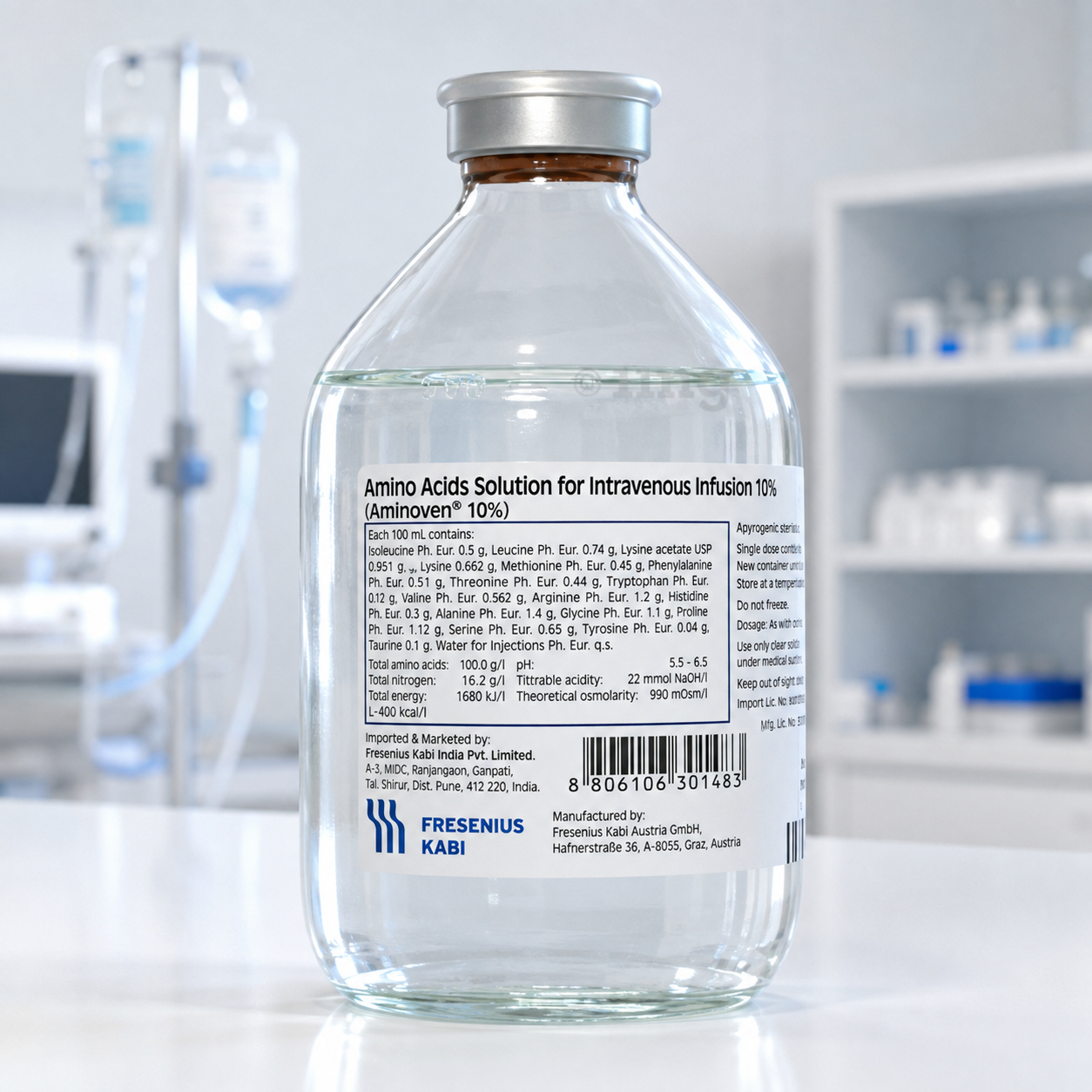
What is Amino Acid Solution for Intravenous Infusion 10% (Aminoven® 10%)?
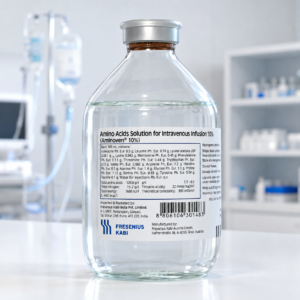
Amino Acid Solution for Intravenous Infusion 10% (Aminoven® 10%) is a sterile intravenous nutrition solution that provides essential and non-essential amino acids directly into the bloodstream. It is commonly used as part of parenteral nutrition (PN) for patients who cannot obtain adequate nutrition through normal eating or tube feeding.
The active ingredients are a balanced mixture of amino acids, which are the building blocks required by the body to produce proteins. These proteins are essential for tissue repair, muscle maintenance, immune function, enzyme production, and overall growth.
This medicine belongs to the parenteral nutrition solutions class and is administered only through intravenous infusion in hospitals or healthcare settings.
Doctors commonly prescribe Amino Acid Solution for Intravenous Infusion 10% for patients who:
- Cannot eat normally after surgery
- Have severe digestive disorders
- Require nutritional support in intensive care
- Experience severe malnutrition
- Need long-term intravenous nutrition
Manufactured by Fresenius Kabi, this product is designed to deliver essential amino acids safely as part of a comprehensive nutritional therapy plan.
Because it is an intravenous nutritional preparation, Amino Acid Solution for Intravenous Infusion 10% should only be administered under the supervision of qualified healthcare professionals.
Uses of Amino Acid Solution for Intravenous Infusion 10%
Amino Acid Solution for Intravenous Infusion 10% is primarily used as a source of protein in patients requiring intravenous nutritional support.
Common Uses
- Treatment of protein deficiency
- Nutritional support in hospitalized patients
- Total or partial parenteral nutrition (TPN/PPN)
- Management of severe malnutrition
- Nutritional support after major surgery
- Supportive therapy for critically ill patients
- Nutrition in patients with gastrointestinal disorders preventing normal feeding
- Nutritional management in certain cancer patients when oral intake is inadequate
This medicine should only be taken under the supervision of a qualified healthcare professional.
Benefits of Amino Acid Solution for Intravenous Infusion 10%
When used appropriately as part of a nutritional care plan, this infusion provides essential protein building blocks needed for recovery.
Benefits include:
- Supports protein synthesis
- Helps maintain muscle mass
- Promotes tissue repair
- Assists wound healing
- Supports immune system function
- Improves overall nutritional status
- Helps patients recover after surgery or severe illness
- Supports long-term nutritional management when oral feeding is not possible
While it supports recovery and nutrition, it does not cure the underlying disease.
How Does Amino Acid Solution for Intravenous Infusion 10% Work?
Amino acids are the fundamental building blocks of proteins. After intravenous administration, the amino acids enter the bloodstream directly, bypassing the digestive system.
The body uses these amino acids to:
- Build new proteins
- Repair damaged tissues
- Produce enzymes and hormones
- Support immune responses
- Maintain muscle strength
- Aid healing and recovery
When combined with glucose, lipids, vitamins, and minerals in parenteral nutrition, the solution helps meet the body’s nutritional requirements.
How to Take Amino Acid Solution for Intravenous Infusion 10%
Since this medicine is an intravenous infusion, it is administered by trained healthcare professionals.
General guidance includes:
- Use exactly as prescribed by the doctor.
- Administer only through intravenous infusion.
- Infusion rate should be determined by the healthcare provider.
- Do not self-administer unless specifically instructed and trained.
- Do not alter the infusion rate without medical advice.
- Regular monitoring of electrolyte levels, kidney function, liver function, and nutritional status may be required during treatment.
Side Effects of Amino Acid Solution for Intravenous Infusion 10%
Like all medicines, Amino Acid Solution for Intravenous Infusion 10% may cause side effects, although not everyone experiences them.
Common Side Effects
- Nausea
- Vomiting
- Fever
- Injection site irritation
- Chills
- Headache
- Mild flushing
Serious Side Effects
Seek immediate medical attention if any of the following occur:
- Severe allergic reaction
- Difficulty breathing
- Swelling of the face or throat
- Severe rash
- Signs of bloodstream infection related to the intravenous catheter
- Fluid overload
- Electrolyte imbalance
- Metabolic complications associated with parenteral nutrition
If side effects persist or become severe, contact your healthcare provider promptly.
Warnings and Precautions
Before using this medicine, inform your healthcare provider if you have:
Pregnancy
Use during pregnancy only when clearly needed and prescribed by a physician.
Breastfeeding
Consult your healthcare provider before receiving intravenous nutritional therapy.
Liver Disease
Patients with severe liver impairment require careful monitoring.
Kidney Disease
Dose adjustments and monitoring may be necessary in patients with impaired kidney function.
Heart Disease
Patients with heart failure or fluid balance problems should be monitored carefully.
Elderly Patients
Older adults may require individualized nutritional assessment.
Alcohol
Follow your doctor’s advice regarding alcohol consumption during treatment.
Driving and Operating Machinery
This medicine is administered in healthcare settings and generally does not directly affect driving ability.
Allergies
Do not use if you are allergic to any component of the formulation.
Drug Interactions
Amino Acid Solution for Intravenous Infusion 10% may interact with other medicines or intravenous nutrition components.
Inform your doctor if you are taking:
- Prescription medicines
- Over-the-counter medicines
- Herbal supplements
- Vitamins
- Electrolyte supplements
- Other intravenous nutrition solutions
Your healthcare team will ensure compatibility with other infused medications and nutrition products.
Storage Instructions
- Store at the temperature recommended by the manufacturer.
- Protect from excessive heat and direct sunlight.
- Do not freeze.
- Keep the container in its original packaging until use.
- Do not use if the solution appears cloudy or contains particles.
- Keep out of reach of children.
- Do not use after the expiry date.
Disclaimer
This information is provided for educational purposes only and should not be considered medical advice. Always consult a qualified healthcare professional before starting, stopping, or changing any medication or nutritional therapy. Do not self-medicate or administer intravenous nutrition without medical supervision. Individual responses to treatment may vary.
Frequently Asked Questions (FAQs)
1. What is Amino Acid Solution for Intravenous Infusion 10% used for?
It is used to provide amino acids as part of parenteral nutrition in patients who cannot obtain adequate nutrition through normal eating or enteral feeding.
2. How does Amino Acid Solution for Intravenous Infusion 10% work?
It supplies essential and non-essential amino acids directly into the bloodstream, allowing the body to build proteins, repair tissues, and maintain important bodily functions.
3. Is this medicine safe?
When administered by qualified healthcare professionals under appropriate monitoring, it is generally considered safe. Regular clinical assessment helps reduce the risk of complications.
4. Can it be used for a long time?
Yes, some patients may require long-term parenteral nutrition. Long-term use should always be supervised by specialists with routine monitoring of nutritional and metabolic status.
5. What happens if a dose is missed?
Because it is administered in a medical setting, missed doses are uncommon. If an infusion is interrupted, the healthcare provider will determine the appropriate course of action.
6. Can I stop treatment suddenly?
Do not discontinue parenteral nutrition without consulting your healthcare provider, as nutritional support should be adjusted according to your medical condition.
7. Can it be taken with food?
This medicine is given intravenously rather than by mouth. Dietary recommendations depend on your overall medical condition and your doctor’s advice.
8. What are the common side effects?
Common side effects include nausea, vomiting, headache, mild fever, chills, and irritation at the infusion site. Most are manageable with appropriate medical care.
9. Who should avoid this medicine?
Patients with known hypersensitivity to any ingredient or certain severe metabolic disorders should not receive this infusion unless specifically advised by a specialist.
10. How should it be stored?
Store according to the manufacturer’s recommendations, protect from light and freezing, inspect the solution before use, and never use it beyond the expiry date or if the container is damaged.
Reviews
There are no reviews yet.