
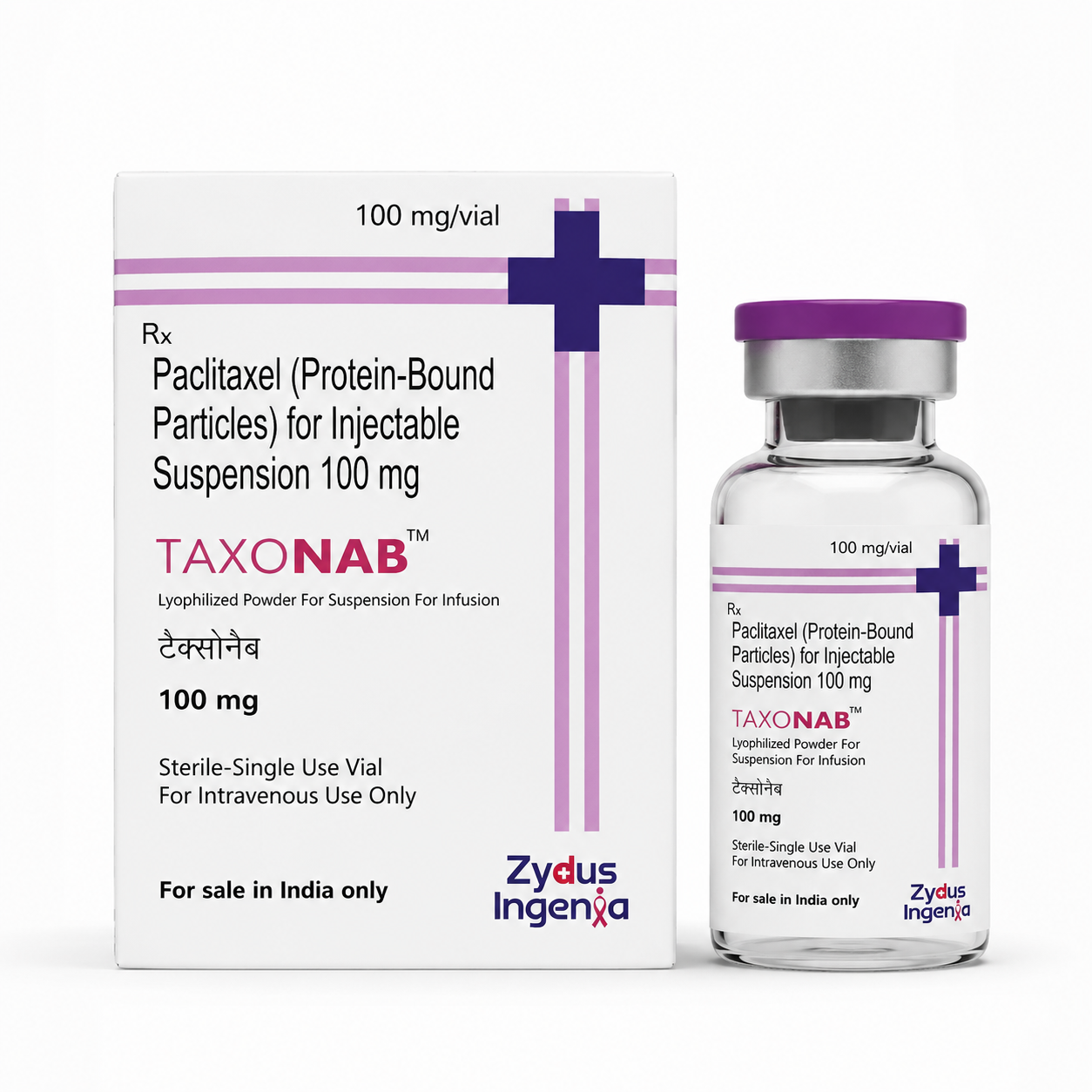
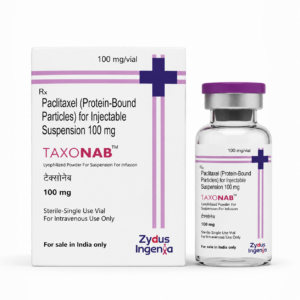
Taxonab 100 mg Injection is an anti-cancer medicine that contains Paclitaxel (Protein-Bound Particles) 100 mg as its active ingredient. It belongs to the class of medicines known as taxane antineoplastic agents (chemotherapy drugs). This formulation is designed as protein-bound paclitaxel, which helps improve drug delivery to cancer cells without the use of certain conventional solvents.
Taxonab is prescribed by oncologists for the treatment of several types of cancers. It works by slowing or stopping the growth of rapidly dividing cancer cells, helping control disease progression and improving treatment outcomes.
Doctors commonly prescribe Taxonab 100 mg Injection as part of combination chemotherapy or as a single-agent treatment depending on the type and stage of cancer.
It is commonly used in the treatment of:
- Breast cancer
- Non-small cell lung cancer (NSCLC)
- Pancreatic cancer (in combination with gemcitabine)
- Other cancers as determined by the treating oncologist
Manufactured by Zydus Lifesciences, Taxonab is intended for administration by trained healthcare professionals in a hospital or oncology clinic.
Since chemotherapy medicines can have significant effects on the body, Taxonab should only be administered under the supervision of a qualified oncologist or healthcare professional. Self-medication is strictly not recommended.
Uses of Taxonab 100 mg Injection
Taxonab is prescribed for the treatment and management of several types of cancer. Depending on the patient’s condition, it may be used alone or together with other anticancer medicines.
Common Medical Uses
- Treatment of metastatic breast cancer
- Treatment of locally advanced breast cancer
- Management of non-small cell lung cancer
- Treatment of metastatic pancreatic cancer (with gemcitabine)
- Supportive chemotherapy in selected solid tumors when recommended by an oncologist
This medicine should only be taken under the supervision of a qualified healthcare professional.
Benefits of Taxonab 100 mg Injection
Taxonab provides several therapeutic benefits when used as prescribed by an oncology specialist.
Benefits include:
- Helps slow the growth of cancer cells
- Supports effective cancer treatment
- May reduce tumor progression
- Can improve symptom control in advanced cancers
- Helps improve quality of life in eligible patients
- Supports long-term cancer management when used appropriately
- Offers a solvent-free paclitaxel formulation that may reduce certain solvent-related reactions compared with conventional paclitaxel
Although Taxonab is an important chemotherapy medicine, it does not guarantee a cure, and treatment outcomes vary among individuals.
How Does Taxonab 100 mg Injection Work?
The active ingredient in Taxonab is Paclitaxel Protein-Bound Particles.
Paclitaxel works by interfering with structures inside cells called microtubules. These structures are essential for cell division. Cancer cells divide rapidly, and paclitaxel stabilizes the microtubules, preventing them from functioning normally.
As a result:
- Cancer cells cannot divide properly.
- Cell division stops.
- Damaged cancer cells eventually die through natural cellular processes.
The protein-bound formulation helps transport paclitaxel more effectively to tumor tissues, supporting its therapeutic action.
How to Take Taxonab 100 mg Injection
Taxonab is not a self-administered medicine. It is given only by trained healthcare professionals.
General Guidance
- Receive the medicine exactly as prescribed by your oncologist.
- It is administered as an intravenous (IV) infusion.
- The infusion schedule depends on your treatment plan.
- Never miss a scheduled chemotherapy appointment unless advised by your doctor.
- Do not attempt to inject this medicine yourself.
- Your doctor may perform blood tests before each treatment cycle.
- Never change or discontinue treatment without medical advice.
Side Effects of Taxonab 100 mg Injection
Like all medicines, Taxonab 100 mg Injection may cause side effects, although not everyone experiences them.
Common Side Effects
- Hair loss
- Fatigue
- Nausea
- Vomiting
- Diarrhea
- Constipation
- Loss of appetite
- Muscle pain
- Joint pain
- Weakness
- Peripheral neuropathy (tingling or numbness in hands and feet)
- Low white blood cell count
- Anemia
Serious Side Effects
Seek immediate medical attention if you experience:
- High fever or signs of infection
- Severe allergic reactions
- Difficulty breathing
- Chest pain
- Irregular heartbeat
- Severe bleeding or bruising
- Persistent numbness or weakness
- Severe liver problems
- Extreme fatigue due to low blood counts
If side effects persist or become severe, contact your healthcare provider promptly.
Warnings and Precautions
Before receiving Taxonab, discuss your medical history with your healthcare provider.
Pregnancy
Taxonab can harm an unborn baby. It should generally not be used during pregnancy unless clearly necessary and recommended by a specialist.
Breastfeeding
Breastfeeding is generally not recommended during treatment because the medicine may pass into breast milk.
Liver Disease
Patients with liver impairment may require dose adjustments and close monitoring.
Kidney Disease
Kidney disease is not typically the primary factor affecting dosing, but overall health should be assessed before treatment.
Heart Disease
Patients with existing heart conditions should be monitored carefully during treatment.
Elderly Patients
Older adults may have an increased risk of certain side effects and may require closer monitoring.
Alcohol
Consult your doctor regarding alcohol consumption during chemotherapy.
Driving and Operating Machinery
Fatigue, weakness, or dizziness may occur. Avoid driving or operating machinery if you do not feel well.
Allergies
Do not receive Taxonab if you have a known allergy to paclitaxel or any component of the formulation.
Drug Interactions
Taxonab may interact with several medicines, potentially affecting its safety or effectiveness.
Examples include:
- Other chemotherapy medicines
- Certain antibiotics
- Antifungal medications
- Antiviral medicines
- Blood thinners
- Immunosuppressants
- Medicines affecting liver enzymes (such as CYP3A4 or CYP2C8 inhibitors/inducers)
Always inform your healthcare provider about:
- Prescription medicines
- Over-the-counter medicines
- Herbal supplements
- Vitamins
- Nutritional products
Never start or stop any medicine without consulting your doctor.
Storage Instructions
Taxonab should be stored according to the manufacturer’s recommendations.
General storage advice includes:
- Store below the recommended temperature as specified on the product label.
- Keep the vial in its original packaging.
- Protect from direct sunlight.
- Keep away from moisture.
- Keep out of the reach of children.
- Do not use after the expiry date.
- Reconstituted solutions should be handled and stored according to hospital protocols.
Disclaimer
This information is provided for educational purposes only and should not be considered medical advice. Taxonab 100 mg Injection should only be used under the supervision of a qualified healthcare professional. Do not self-medicate or alter your treatment plan without consulting your doctor. Individual responses to chemotherapy vary, and your healthcare provider is the best source of guidance for your specific condition.
Frequently Asked Questions (FAQs)
1. What is Taxonab 100 mg Injection used for?
Taxonab is primarily used to treat breast cancer, non-small cell lung cancer, and pancreatic cancer in appropriate patients. Your oncologist will determine whether it is suitable for your condition.
2. How does Taxonab work?
Taxonab contains paclitaxel protein-bound particles that prevent cancer cells from dividing, slowing tumor growth and promoting cancer cell death.
3. Is Taxonab safe?
When administered by trained healthcare professionals and under proper monitoring, Taxonab is considered an established chemotherapy medicine. Like all chemotherapy drugs, it carries risks of side effects.
4. Can Taxonab be used for a long time?
Treatment duration depends on your type of cancer, response to therapy, and tolerance. Your oncologist will decide the appropriate number of treatment cycles.
5. What happens if I miss a scheduled dose?
If you miss an appointment for your infusion, contact your oncology team as soon as possible to reschedule. Do not attempt to make up for a missed treatment on your own.
6. Can I stop Taxonab suddenly?
Do not stop chemotherapy without consulting your doctor. Interrupting treatment may reduce its effectiveness or alter your overall treatment plan.
7. Can Taxonab be taken with food?
Because Taxonab is given by intravenous infusion, food intake does not directly affect its administration. Follow your healthcare provider’s advice regarding eating before treatment.
8. What are the common side effects of Taxonab?
Common side effects include hair loss, fatigue, nausea, reduced blood cell counts, numbness or tingling in the hands and feet, muscle pain, and decreased appetite.
9. Who should avoid Taxonab?
People with severe hypersensitivity to paclitaxel or those for whom the risks outweigh the benefits, as determined by a healthcare professional, should avoid this medicine. It should also be used with caution in patients with significant liver impairment.
10. How should Taxonab be stored?
Store the unopened vial according to the manufacturer’s instructions, protect it from light and moisture, and ensure it is kept out of the reach of children. Hospitals should follow appropriate storage procedures for reconstituted solutions.
Reviews
There are no reviews yet.