
Akynzeo 300 mg/0.5 mg Capsule
What is Akynzeo?
Akynzeo 300 mg/0.5 mg Capsule is a prescription antiemetic medicine containing two active ingredients: netupitant 300 mg and palonosetron 0.5 mg. It belongs to a combination of two different anti-nausea drug classes and is designed to help prevent nausea and vomiting associated with cancer chemotherapy. The FDA-approved capsule formulation is used in adults, in combination with dexamethasone, for the prevention of both acute and delayed nausea and vomiting associated with initial and repeat courses of cancer chemotherapy, including highly emetogenic chemotherapy.
Netupitant is a neurokinin-1 (NK1) receptor antagonist, while palonosetron is a 5-HT3 receptor antagonist. These medicines work through different pathways involved in chemotherapy-induced nausea and vomiting. By combining the two active ingredients in one capsule, Akynzeo provides coverage against nausea and vomiting during both the early and later phases following chemotherapy.
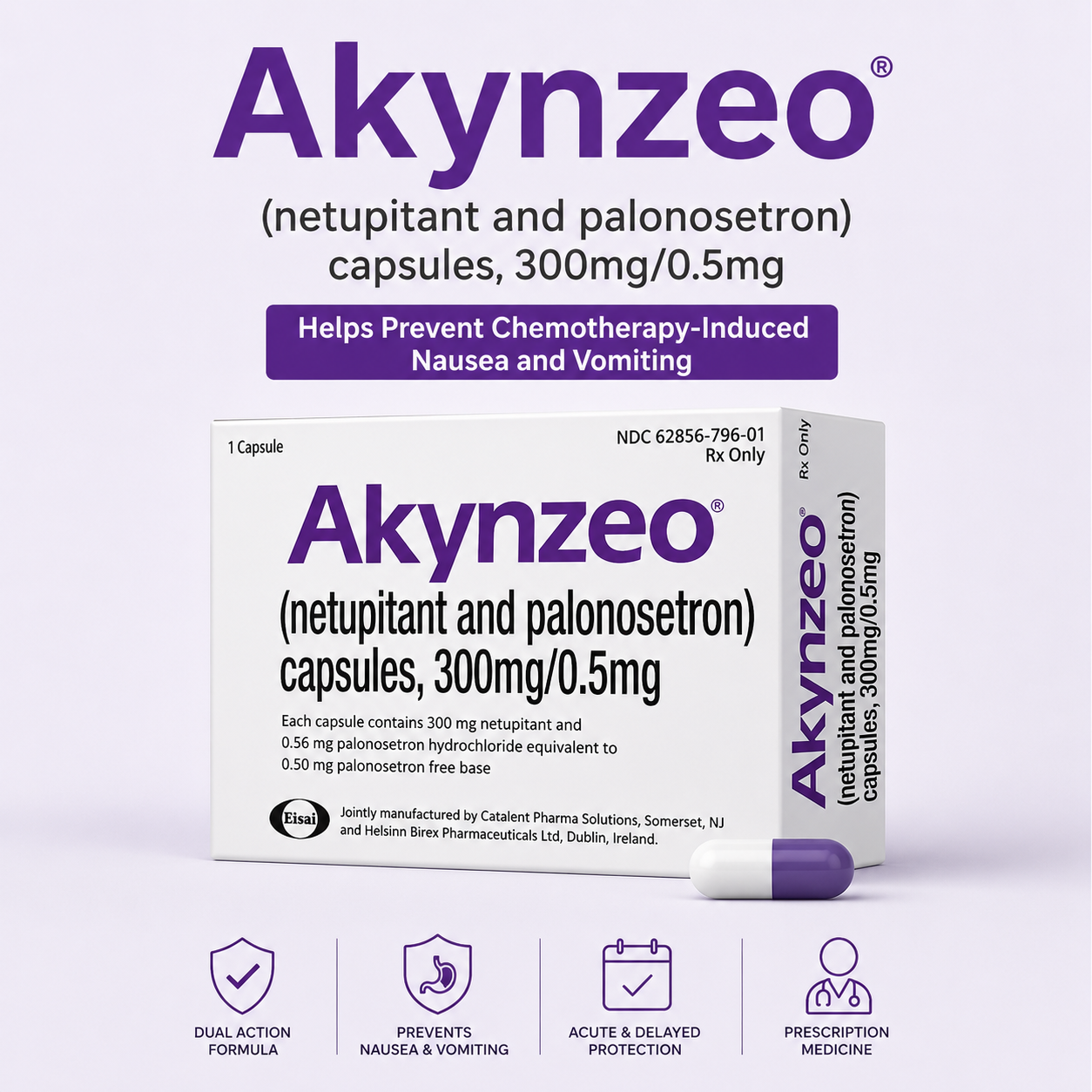
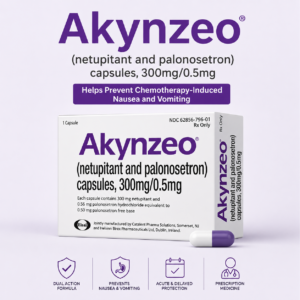
The product shown is a hard gelatin capsule containing 300 mg netupitant and 0.5 mg palonosetron. The official prescribing information identifies Akynzeo as a human prescription medicine.
Akynzeo should be used only under the direction and supervision of a qualified healthcare professional. Treatment decisions depend on the patient’s chemotherapy regimen, medical history, other medicines, and individual risk factors.
Akynzeo Uses
Akynzeo is primarily used as part of an antiemetic treatment plan for adults receiving cancer chemotherapy. Its approved capsule indication is the prevention of acute and delayed nausea and vomiting associated with initial and repeat courses of cancer chemotherapy.
Commonly described Akynzeo uses include:
- Prevention of chemotherapy-induced nausea.
- Prevention of chemotherapy-induced vomiting.
- Prevention of acute nausea and vomiting following chemotherapy.
- Prevention of delayed nausea and vomiting following chemotherapy.
- Support of antiemetic therapy during chemotherapy regimens with a significant risk of nausea and vomiting.
Akynzeo is intended for prevention rather than treatment of unrelated causes of nausea, such as ordinary stomach upset or motion sickness. The appropriate antiemetic regimen is selected by the treating healthcare professional according to the chemotherapy protocol.
Akynzeo Benefits
The principal benefit of Akynzeo is its ability to provide antiemetic activity through two complementary mechanisms in a single medicine. Chemotherapy can activate several biological pathways associated with nausea and vomiting, so targeting more than one pathway can be clinically useful.
Potential benefits of Akynzeo, when appropriately prescribed, include:
- Helps prevent nausea associated with cancer chemotherapy.
- Helps prevent vomiting associated with chemotherapy.
- Provides activity against both acute and delayed chemotherapy-induced nausea and vomiting.
- Combines an NK1 receptor antagonist and a 5-HT3 receptor antagonist in one capsule.
- Can form part of a broader antiemetic treatment plan prescribed by an oncology team.
- May help patients tolerate chemotherapy more comfortably by reducing treatment-related nausea and vomiting.
Akynzeo does not treat cancer itself and should not be considered a cure for cancer or chemotherapy-related disease. Its role is supportive, helping prevent a particular treatment-related complication.
How Does Akynzeo Work?
Akynzeo contains netupitant and palonosetron, which act on different receptors involved in the vomiting response.
Netupitant blocks neurokinin-1 (NK1) receptors. Substance P, a naturally occurring chemical messenger in the body, can activate NK1 receptors involved in pathways that contribute to nausea and vomiting. By blocking these receptors, netupitant helps prevent chemotherapy-induced nausea and vomiting, including delayed symptoms.
Palonosetron blocks 5-hydroxytryptamine type 3 (5-HT3) receptors. These receptors are involved in the signaling pathway that can trigger nausea and vomiting after chemotherapy. Palonosetron is particularly associated with prevention of the acute phase of chemotherapy-induced nausea and vomiting.
According to prescribing information, the two components therefore provide complementary activity: palonosetron helps prevent acute nausea and vomiting, while netupitant contributes to prevention during both acute and delayed phases.
Akynzeo Dosage Information
Akynzeo dosage is determined by the treating healthcare professional and forms part of an individualized chemotherapy-related antiemetic regimen. The FDA prescribing information for the capsule describes a single 300 mg netupitant/0.5 mg palonosetron capsule used in adults in conjunction with dexamethasone according to the chemotherapy protocol.
Patients should not change the prescribed regimen, take additional doses, or combine Akynzeo with other antiemetic medicines unless advised by their healthcare professional. The chemotherapy regimen, other medicines, liver and kidney function, and individual health circumstances can affect treatment decisions.
Akynzeo Side Effects
Like all prescription medicines, Akynzeo may cause side effects, although not everyone experiences them. In clinical studies and prescribing information, commonly reported adverse reactions associated with Akynzeo capsules include headache, asthenia, dyspepsia, fatigue, constipation, and erythema.
Common Side Effects
Possible common side effects include:
- Headache
- Fatigue
- Constipation
- Indigestion or dyspepsia
- Weakness or asthenia
- Skin redness or erythema
The presence or severity of side effects can vary between individuals. Patients receiving chemotherapy may also experience symptoms caused by the cancer treatment itself, so healthcare professionals may need to determine the cause of a particular symptom.
Serious Side Effects
Serious reactions can occur and require prompt medical attention. Hypersensitivity reactions, including severe allergic reactions, have been reported with palonosetron, one of Akynzeo’s components.
Akynzeo has also been associated with reports of serotonin syndrome, particularly when 5-HT3 receptor antagonists are used with other serotonergic medicines. Patients should promptly seek medical attention if they develop concerning symptoms after taking a prescribed medicine combination.
If side effects persist, become severe, or cause concern, contact a healthcare provider promptly.
Warnings and Precautions
Akynzeo requires medical supervision because it can interact with other medicines and may not be appropriate for every patient.
Allergies
Patients should tell their healthcare professional about previous allergic reactions to palonosetron, netupitant, other 5-HT3 receptor antagonists, or any component of the formulation. Hypersensitivity reactions have been reported.
Pregnancy
The prescribing information warns that Akynzeo may cause fetal harm. Patients who are pregnant, planning pregnancy, or who could become pregnant should discuss treatment with their healthcare professional before receiving the medicine.
Liver and Kidney Conditions
Severe liver impairment and severe kidney impairment or end-stage renal disease are important considerations. Current prescribing information advises avoiding Akynzeo in patients with severe hepatic impairment and in those with severe renal impairment or end-stage renal disease.
Older Adults
Age, overall health, other medicines, and organ function can influence medication management. Older adults should provide their healthcare professional with a complete list of current medicines and medical conditions.
Driving and Alcohol
Patients should discuss alcohol consumption and activities such as driving with their healthcare professional, particularly if they experience dizziness, weakness, fatigue, or other symptoms. Individual advice may vary depending on other medicines being used during chemotherapy.
Drug Interactions
Akynzeo can interact with other medicines. Netupitant affects the CYP3A4 enzyme system, which can change the concentration of certain medicines in the body. The prescribing information notes that inhibition of CYP3A4 can affect some concomitant medicines for several days following a dose. CYP3A4 inducers such as rifampin can reduce netupitant exposure and should be avoided according to prescribing guidance.
Patients should inform their healthcare professional about:
- Prescription medicines
- Non-prescription or OTC medicines
- Antidepressants and other serotonergic medicines
- Pain medicines
- Vitamins
- Herbal or nutritional supplements
- Medicines used during chemotherapy
Providing a complete medication list helps the healthcare team evaluate possible interactions and adjust treatment when necessary.
Storage Instructions
According to current U.S. prescribing information, Akynzeo capsules should be stored at 20°C to 25°C (68°F to 77°F), with permitted temperature excursions between 15°C and 30°C (59°F and 86°F).
General storage precautions include:
- Keep the medicine in its original packaging when appropriate.
- Protect it from unsuitable temperature conditions.
- Keep it away from excessive moisture and direct environmental exposure.
- Keep all medicines out of the reach of children.
- Do not use medicines beyond their expiry date.
Always follow the storage instructions supplied with the specific product package.
Akynzeo Manufacturer
The product shown in the provided packaging is labeled Akynzeo (netupitant and palonosetron) capsules, 300 mg/0.5 mg. The packaging image identifies Catalent Pharma Solutions, Somerset, New Jersey, and Helsinn Birex Pharmaceuticals Ltd., Dublin, Ireland in connection with joint manufacturing.
Current U.S. labeling identifies Helsinn Therapeutics (U.S.), Inc. as the product labeler. Manufacturer and packaging information can vary by market and product presentation, so the information printed on the supplied pack should be checked for the specific market.
Akynzeo Price and Availability
The Akynzeo price can vary according to country, pharmacy, pack size, insurance or healthcare coverage, distributor, and local regulations. Because prescription medicine pricing changes over time, patients should confirm the current price through a licensed pharmacy or authorized healthcare provider.
Any decision to purchase or use Akynzeo should follow local prescription requirements and professional medical guidance. Product availability can also differ between countries.
Frequently Asked Questions
1. What is Akynzeo 300 mg/0.5 mg used for?
Akynzeo is used in adults as part of an antiemetic regimen to prevent acute and delayed nausea and vomiting associated with cancer chemotherapy. The capsule combines netupitant and palonosetron and is used with dexamethasone according to the prescribed chemotherapy protocol.
2. What are the active ingredients in Akynzeo?
Each Akynzeo capsule contains 300 mg of netupitant and 0.5 mg of palonosetron. Netupitant is an NK1 receptor antagonist, while palonosetron is a 5-HT3 receptor antagonist. Their complementary actions help prevent chemotherapy-induced nausea and vomiting.
3. How does Akynzeo work?
Akynzeo works through two different pathways involved in nausea and vomiting. Netupitant blocks NK1 receptors associated with substance P signaling, while palonosetron blocks 5-HT3 receptors involved in serotonin-mediated nausea and vomiting pathways.
4. What are the common Akynzeo side effects?
Commonly reported adverse reactions include headache, weakness or asthenia, indigestion, fatigue, constipation, and erythema. Not every patient experiences these effects, and other symptoms may occur because of chemotherapy or other medicines being taken at the same time.
5. Can Akynzeo interact with other medicines?
Yes. Netupitant affects CYP3A4 and can alter the levels of certain medicines. Akynzeo may also be relevant when combined with serotonergic medicines because of the potential risk of serotonin syndrome. A healthcare professional should review all medicines before treatment.
6. Is Akynzeo suitable during pregnancy?
Akynzeo may cause fetal harm according to prescribing information. Anyone who is pregnant, planning pregnancy, or may become pregnant should discuss the risks and benefits with their healthcare professional before treatment.
7. Can people with liver or kidney problems use Akynzeo?
Severe liver or kidney impairment requires particular attention. Current U.S. prescribing information recommends avoiding Akynzeo in severe hepatic impairment and severe renal impairment or end-stage renal disease. Medical assessment is therefore important before treatment.
8. Is Akynzeo a cancer treatment?
No. Akynzeo is not an anticancer medicine and does not treat or eliminate cancer. It is an antiemetic medicine used as supportive care to prevent nausea and vomiting associated with chemotherapy.
9. How should Akynzeo be stored?
Current U.S. labeling recommends storing Akynzeo capsules at controlled room temperature of 20°C to 25°C, with permitted excursions between 15°C and 30°C. The package labeling should always be checked because storage requirements may differ for other formulations or markets.
10. Can I use Akynzeo without a prescription?
Akynzeo is a prescription medicine and should be used only under appropriate medical supervision. The healthcare professional managing chemotherapy can determine whether this medicine is suitable based on the chemotherapy regimen, other medicines, medical conditions, and individual risk factors.
Disclaimer
This product description is provided for educational and informational purposes only. It is not a substitute for professional medical advice, diagnosis, or treatment. Akynzeo is a prescription medicine and should be used only according to the instructions of a qualified healthcare professional.
Do not self-medicate, change a prescribed treatment plan, or combine medicines without discussing the decision with your doctor or pharmacist. Individual responses to medicines can vary, and the official prescribing information supplied with the product should be consulted for complete safety, dosing, interaction, and administration information.
Reviews
There are no reviews yet.