
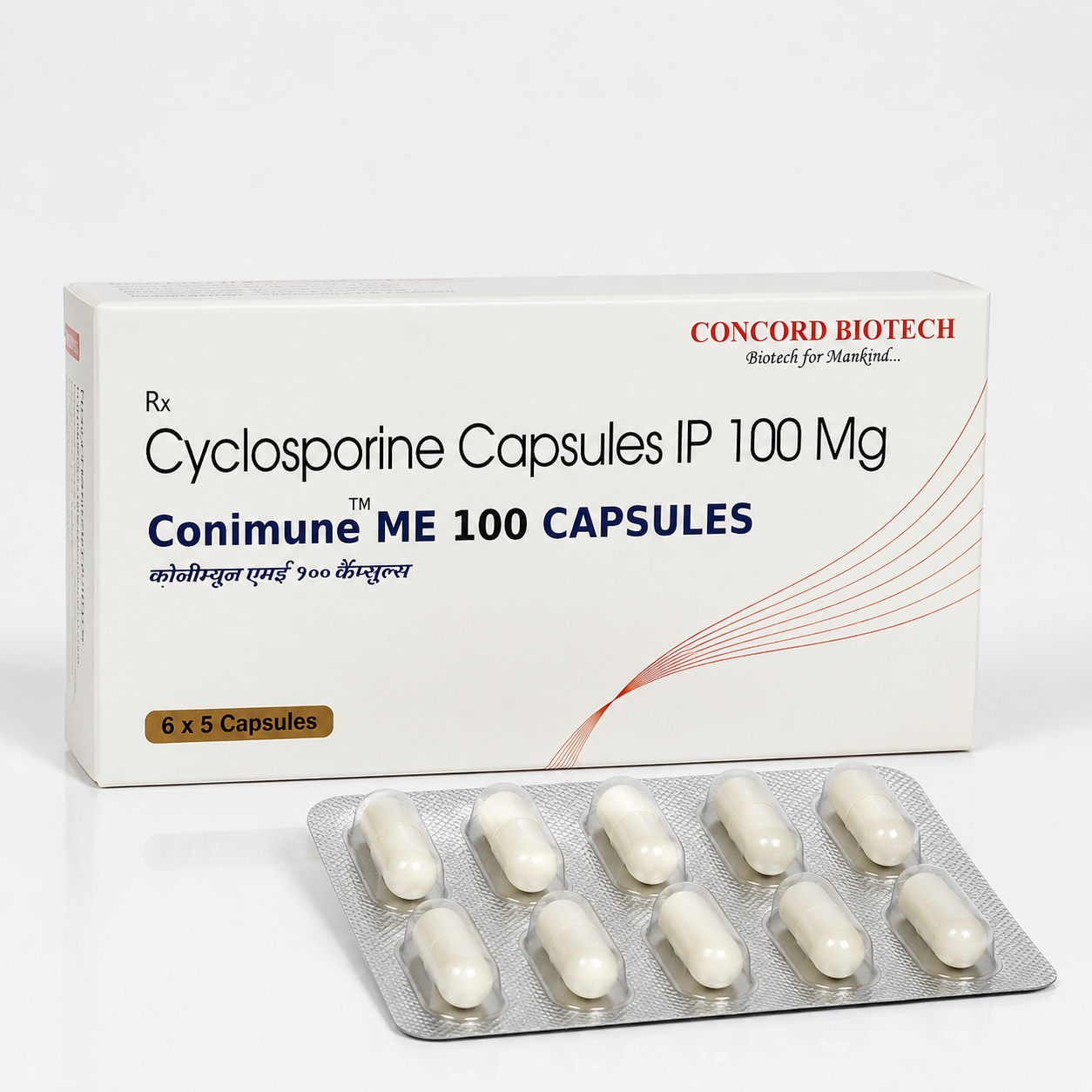
Conimune ME 100 Capsules: Uses, Benefits, Side Effects, Dosage & Precautions
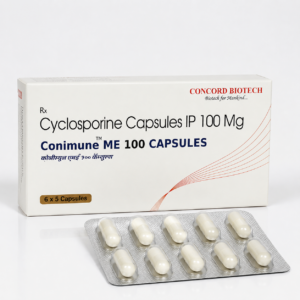
Conimune ME 100 Capsules contains Cyclosporine 100 mg and is a prescription immunosuppressant manufactured by Concord Biotech. The product is listed by Concord Biotech as a cyclosporine capsule available in 25 mg, 50 mg, and 100 mg strengths and used as an immunosuppressive medicine in transplant maintenance therapy.
Cyclosporine is a powerful medicine that reduces certain immune-system responses. Because excessive immune activity can cause a transplanted organ to be recognized as foreign, cyclosporine is commonly used as part of treatment designed to reduce the risk of organ rejection. Treatment requires careful medical supervision, regular laboratory tests, and monitoring of blood pressure and kidney function.
What is Conimune ME 100 Capsules?
Conimune ME 100 Capsules is a prescription immunosuppressant containing cyclosporine 100 mg. It belongs to a group of medicines called calcineurin inhibitors.
After an organ transplant, the immune system may identify the transplanted organ as foreign and attempt to attack it. Cyclosporine works by suppressing specific immune cells, particularly T-lymphocyte activity. This reduces the immune response that can contribute to organ rejection.
Concord Biotech lists Conimune ME as a transplant and immunology product containing cyclosporine and describes it as an immunosuppressive medicine used in maintenance therapy.
Cyclosporine has a narrow therapeutic range, meaning that the amount of medicine in the body needs to remain within an appropriate range. Too little may reduce treatment effectiveness, while excessive exposure can increase the risk of adverse effects. For this reason, doctors may order blood tests and adjust treatment according to the patient’s condition and laboratory results.
Conimune ME 100 Capsules should only be used when prescribed by a qualified healthcare professional. Do not start, stop, or change the medicine without medical advice.
Uses of Conimune ME 100 Capsules
The primary use of Conimune ME in Concord Biotech’s transplant portfolio is as an immunosuppressive medicine for transplant maintenance therapy.
Depending on the transplant and the patient’s overall treatment plan, cyclosporine may be prescribed for:
- Helping prevent rejection of a kidney transplant
- Helping prevent rejection of a liver transplant
- Helping prevent rejection of a heart transplant
- Supporting long-term immunosuppressive treatment after transplantation
- Being used together with other medicines, such as corticosteroids, when prescribed as part of an individualized transplant regimen
The exact treatment combination depends on the type of transplant, other medicines being taken, laboratory results, and the patient’s response.
This medicine should only be taken under the supervision of a qualified healthcare professional.
Benefits of Conimune ME 100 Capsules
The main benefit of Conimune ME 100 Capsules is its ability to suppress an unwanted immune response when immunosuppression is medically required.
Potential benefits include:
- Helps reduce the immune response against a transplanted organ
- Supports maintenance of transplant immunosuppression
- Helps reduce the risk of immune-mediated organ rejection when appropriately prescribed
- Can be incorporated into combination immunosuppressive treatment
- Supports long-term transplant management under specialist supervision
These benefits depend on correct use, appropriate monitoring, and the individual patient’s medical condition. Conimune ME is not a cure for the underlying need for transplantation and does not guarantee prevention of rejection.
How Does Conimune ME 100 Capsules Work?
Cyclosporine works mainly by reducing the activity of certain immune cells called T lymphocytes.
Normally, activated T cells can release substances that stimulate a strong immune response. Cyclosporine inhibits the calcineurin pathway involved in T-cell activation. As a result, production of important immune-signaling molecules, including interleukin-2, is reduced.
In simple terms, Conimune ME helps turn down part of the immune system’s response. This is particularly important following transplantation, when an overly active immune response can damage the transplanted organ.
How to Take Conimune ME 100 Capsules
The Conimune ME dosage must be individually determined by the treating doctor. Cyclosporine dosing depends on factors such as the type of transplant, other medicines, blood concentrations, kidney function, and clinical response. Concord Biotech also notes that dosing is dependent on the transplant type and formulation.
General guidance includes:
- Take Conimune ME exactly as prescribed.
- Take it consistently at the prescribed times each day.
- Follow your doctor’s instructions regarding its relationship to meals.
- Swallow the capsule with water unless your healthcare professional gives different instructions.
- Do not crush or chew the capsule unless specifically instructed.
- Do not take an extra dose to compensate for a missed dose unless your healthcare professional tells you to do so.
- Never change the dose on your own.
- Do not switch between different cyclosporine formulations without medical supervision because formulations may not be interchangeable.
Because cyclosporine treatment often requires therapeutic drug monitoring, keep scheduled blood tests and medical appointments.
Conimune ME 100 Capsules Side Effects
Like all medicines, Conimune ME 100 Capsules may cause side effects, although not everyone experiences them.
Common Side Effects
Possible side effects of cyclosporine include:
- Headache
- Tremor or shakiness
- Increased blood pressure
- Nausea or other digestive symptoms
- Increased hair growth
- Gum enlargement
- Increased blood creatinine or changes in kidney function
- Increased potassium levels
- Fatigue
The likelihood and severity of side effects can vary depending on the dose, duration of treatment, other medicines, and individual health.
Serious Side Effects
Cyclosporine can cause significant adverse reactions and therefore requires medical monitoring. Serious problems may include:
- Significant kidney impairment
- Liver injury
- Severe or persistent high blood pressure
- Serious infections due to immune suppression
- Neurological problems, including confusion, seizures, or severe neurological symptoms
- Significant electrolyte abnormalities
- Increased risk of certain malignancies with long-term immunosuppression
Cyclosporine is specifically associated with risks of nephrotoxicity and hepatotoxicity, and renal function should be monitored during treatment.
If side effects persist or become severe, contact your healthcare provider promptly.
Warnings and Precautions
Kidney and Liver Disease
Cyclosporine can affect kidney and liver function. Patients with existing kidney or liver problems may require particularly careful monitoring.
Blood Pressure
High blood pressure is a recognized adverse effect of cyclosporine. Blood pressure should therefore be monitored regularly during treatment.
Pregnancy and Breastfeeding
If you are pregnant, planning pregnancy, or breastfeeding, discuss this with your doctor before taking cyclosporine. The decision to use the medicine requires an assessment of potential benefits and risks.
Infections
Because cyclosporine suppresses the immune system, susceptibility to infections may increase. Report signs of infection to your healthcare provider.
Vaccinations
Cyclosporine may reduce the effectiveness of some vaccines, and live attenuated vaccines may not be appropriate during treatment. Always tell your doctor before receiving a vaccine.
Elderly Patients
Older adults may require closer monitoring, particularly for kidney function, blood pressure, and interactions with other medicines.
Driving
Cyclosporine can sometimes cause neurological effects such as dizziness, confusion, or drowsiness. Avoid driving or operating machinery if these effects occur and discuss them with your healthcare provider.
Grapefruit
Grapefruit and grapefruit juice can increase cyclosporine blood concentrations and should generally be avoided unless your healthcare professional specifically advises otherwise.
Drug Interactions
Cyclosporine interacts with many medicines because it is extensively metabolized through pathways including CYP3A4. Some medicines can increase cyclosporine concentrations, while others can reduce them.
Examples include certain:
- Antibiotics
- Antifungal medicines
- Calcium-channel blockers
- Anticonvulsants
- Corticosteroids
- Anti-inflammatory medicines
- Other immunosuppressants
- Herbal supplements such as St. John’s wort
Patients should tell their doctor about all prescription medicines, over-the-counter products, vitamins, and herbal supplements they use.
Do not start a new medicine or supplement without checking with your healthcare professional.
Storage Instructions
Store Conimune ME 100 Capsules according to the instructions on the product packaging or provided by your pharmacist.
General precautions include:
- Keep the medicine in its original packaging.
- Protect it from excessive heat, moisture, and direct sunlight.
- Keep it out of reach of children.
- Do not use capsules after the expiry date.
- Do not use damaged or improperly stored medicine.
Conimune ME 100 Price and Manufacturer
The Conimune ME 100 price can vary depending on the pharmacy, location, pack size, taxes, and applicable pricing policies. Patients should verify the current price and availability through a legitimate pharmacy or their healthcare provider rather than relying on outdated online listings.
Conimune ME 100 manufacturer: Concord Biotech. Concord Biotech’s published product information identifies Conimune ME as cyclosporine capsules in 25 mg, 50 mg, and 100 mg strengths.
Because Conimune ME 100 is a prescription immunosuppressant, it should be obtained and used only through appropriate medical and pharmacy channels. It should not be self-medicated or shared with another person.
Frequently Asked Questions
1. What is Conimune ME 100 Capsules used for?
Conimune ME 100 contains cyclosporine and is used as an immunosuppressive medicine, particularly in transplant maintenance therapy. It helps reduce the immune response that can contribute to rejection of a transplanted organ. Its use and combination with other medicines should be determined by the transplant specialist.
2. How does Conimune ME 100 work?
It suppresses specific immune-system activity by inhibiting the calcineurin pathway involved in T-cell activation. This reduces the production of immune-signaling substances and helps control the immune response against a transplanted organ.
3. Is Conimune ME 100 safe?
Cyclosporine can be effective when appropriately prescribed and monitored, but it can also cause serious adverse effects, particularly involving the kidneys, liver, blood pressure, and immune system. Regular medical monitoring is important. It should never be used without a prescription and specialist supervision.
4. Can Conimune ME 100 be taken long term?
Cyclosporine may be used as part of long-term transplant immunosuppressive therapy. Long-term treatment requires continued medical supervision and laboratory monitoring. The doctor may periodically assess kidney function, blood pressure, drug levels, and other health parameters.
5. What happens if I miss a dose?
If you miss a dose, follow the instructions provided by your transplant or prescribing team. Do not take extra medicine to compensate unless specifically instructed. Because maintaining appropriate cyclosporine exposure is important, repeated missed doses should be discussed promptly with your healthcare professional.
6. Can I stop taking Conimune ME suddenly?
No. Do not stop cyclosporine suddenly unless your doctor specifically tells you to. In transplant patients, interruption of immunosuppressive therapy can increase the risk of organ rejection. Any change in treatment should be made by the treating specialist.
7. Can Conimune ME 100 be taken with food?
Cyclosporine modified capsules should generally be taken consistently in relation to meals, following the instructions given by the healthcare professional. Consistency helps maintain predictable exposure to the medicine. Grapefruit and grapefruit juice should be avoided because they can increase cyclosporine concentrations.
8. What are the common Conimune ME 100 side effects?
Possible side effects include headache, tremor, increased blood pressure, digestive symptoms, increased hair growth, gum enlargement, and changes in kidney function. Not everyone experiences these effects. Any severe, unusual, or persistent symptom should be reported to the treating doctor.
9. Who should avoid Conimune ME 100?
People with a known allergy to cyclosporine or its formulation ingredients should not take it. Certain patients with significant kidney problems, uncontrolled hypertension, or other serious conditions may require alternative treatment or specialist assessment. Your doctor should review your medical history before prescribing it.
10. How should Conimune ME 100 be stored?
Keep the capsules in their original packaging and follow the storage instructions printed on the pack or supplied by the pharmacist. Protect the medicine from excessive heat, moisture, and direct sunlight, and keep it away from children. Do not use the product after its expiry date.
Disclaimer
This article is provided for educational and informational purposes only. It is not a substitute for professional medical advice, diagnosis, or treatment. Conimune ME 100 is a prescription immunosuppressant and should be taken only according to the prescription and instructions of a qualified healthcare professional.
Do not self-medicate, change the Conimune ME dosage, discontinue treatment, or combine it with other medicines or supplements without medical advice. Individual responses to cyclosporine can vary, and appropriate blood tests and clinical monitoring may be required during treatment.

Reviews
There are no reviews yet.