
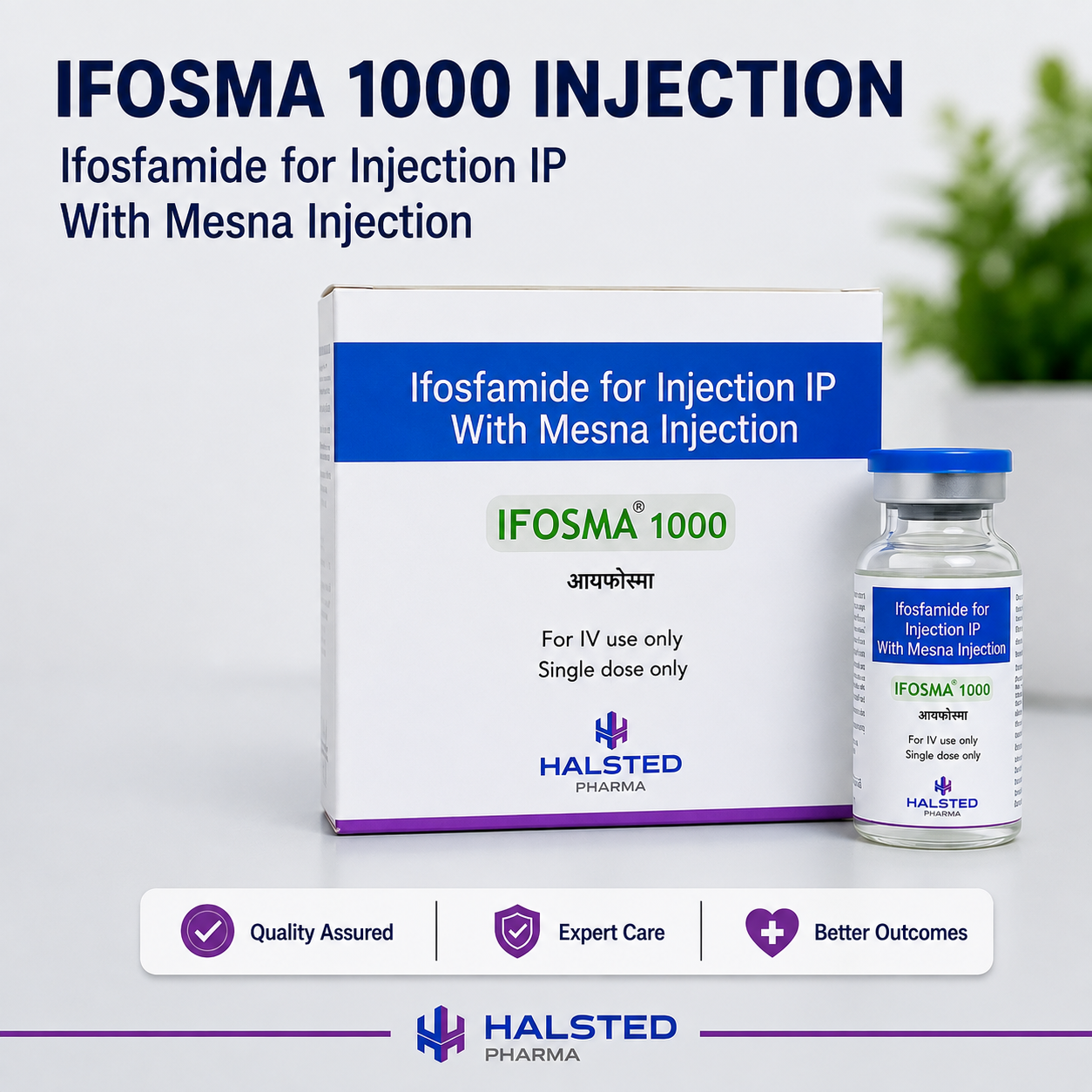
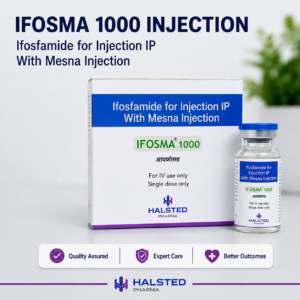
What is Ifosma 1000?
Ifosma 1000 is an injectable anticancer medicine containing ifosfamide, a chemotherapy drug, together with mesna, a protective medicine used to reduce certain bladder-related toxicity associated with ifosfamide treatment.
Ifosfamide belongs to a group of medicines called alkylating agents. It is a prodrug, meaning it must be metabolically activated in the body before producing its cancer-fighting effects. Its active metabolites can damage the DNA of rapidly dividing cells, interfering with their ability to grow and multiply.
Mesna has a different role. It reacts with urotoxic metabolites of ifosfamide and helps protect the urinary bladder from chemical injury, thereby reducing the risk of ifosfamide-associated hemorrhagic cystitis.
Ifosfamide is used as part of specific chemotherapy regimens for certain cancers and is generally administered in combination with other anticancer medicines according to an oncologist’s treatment plan. The appropriate indication depends on the patient’s diagnosis, previous treatment, overall health, and applicable clinical guidelines.
Because Ifosma 1000 is a potent chemotherapy medicine, it should only be used under the supervision of a qualified oncologist or other appropriately trained healthcare professional.
Uses of Ifosma 1000
Ifosma 1000 may be prescribed as part of combination chemotherapy for selected cancers. The exact approved indications can vary according to the product label and clinical setting.
Possible medically supervised uses include:
- Treatment of certain malignant cancers as part of combination chemotherapy.
- Treatment of selected germ-cell cancers in appropriate clinical circumstances.
- Use within specialist oncology protocols when an oncologist considers ifosfamide appropriate.
- Prevention of certain bladder complications through the accompanying use of mesna.
The specific cancer indication, treatment schedule, and combination medicines must be determined by the treating oncology team. Ifosfamide labeling describes its use with other approved antineoplastic agents for specific chemotherapy settings.
This medicine should only be administered under the supervision of a qualified healthcare professional.
Benefits of Ifosma 1000
Ifosma 1000 is intended to provide an important component of selected chemotherapy regimens. Potential clinical benefits include:
- Helps destroy or inhibit the growth of susceptible cancer cells.
- Can form part of combination chemotherapy for selected malignancies.
- May contribute to cancer treatment when included in an appropriate oncology protocol.
- The accompanying mesna helps reduce the risk of ifosfamide-induced hemorrhagic cystitis.
- May provide therapeutic benefit when carefully selected according to the patient’s cancer type and treatment history.
These benefits should not be interpreted as a guarantee of cure. Response to chemotherapy varies between individuals and depends on the cancer type, stage, previous treatments, and overall health.
How Does Ifosma 1000 Work?
Ifosfamide is converted by liver enzymes into active metabolites. One important active metabolite produces an alkylating effect that can form cross-links within DNA. These DNA changes interfere with the ability of cancer cells to reproduce and survive.
However, chemotherapy medicines can also affect some normal cells that divide rapidly. This helps explain why treatment can cause effects such as reduced blood-cell counts, hair loss, nausea, and other adverse reactions.
Mesna works differently. It binds to reactive ifosfamide metabolites in the urinary tract and helps detoxify them, reducing their damaging effects on the bladder.
How to Take Ifosma 1000
Ifosma 1000 is an intravenous chemotherapy medicine and is not intended for self-administration.
Important points include:
- It should be administered only by appropriately trained healthcare professionals.
- The treatment schedule is individualized by the oncology team.
- The patient’s blood counts, kidney function, urinary findings, and overall condition may need monitoring during treatment.
- Adequate hydration and appropriate bladder protection are important components of ifosfamide treatment.
- Patients should never alter, delay, repeat, or discontinue a chemotherapy treatment schedule without speaking with their oncology team.
Because the appropriate treatment regimen varies significantly between patients, the Ifosma 1000 dosage should not be determined from general online information.
Ifosma 1000 Side Effects
Like all medicines, Ifosma 1000 may cause side effects, although not everyone experiences them.
Common Side Effects
Possible adverse effects associated with ifosfamide-based treatment include:
- Nausea and vomiting
- Hair loss
- Reduced white blood-cell counts
- Anemia
- Increased susceptibility to infection
- Fatigue
- Reduced appetite
- Blood or red cells in the urine
- Nervous-system effects
Ifosfamide prescribing information identifies myelosuppression, nausea/vomiting, alopecia, hematuria, infection, and central nervous system toxicity among reported adverse reactions.
Serious Side Effects
Ifosfamide can cause potentially serious or life-threatening complications, including:
- Severe suppression of bone marrow function
- Serious infections
- Encephalopathy or other neurological toxicity
- Significant kidney injury
- Severe bladder or urinary toxicity
- Heart-related toxicity
- Lung toxicity
- Severe allergic reactions
The prescribing information specifically carries major warnings concerning myelosuppression, neurotoxicity, nephrotoxicity, and urotoxicity.
If a patient receiving this treatment develops unusual confusion, severe weakness, breathing difficulty, significant urinary changes, fever, or other concerning symptoms, the treating medical team should be contacted promptly.
Warnings and Precautions
Ifosma 1000 requires specialist medical supervision. Doctors may consider the following before and during treatment:
- Kidney function: Ifosfamide can cause significant renal toxicity, so kidney function requires appropriate monitoring.
- Blood counts: Bone-marrow suppression can increase the risk of infection and bleeding. Blood counts are monitored during treatment.
- Neurological effects: Ifosfamide can cause serious central nervous system toxicity, including encephalopathy.
- Heart disease: Cardiotoxicity has been reported, and additional caution may be needed in patients with cardiac risk factors.
- Liver problems: The medical team may consider hepatic function and other risk factors when planning treatment.
- Pregnancy: Ifosfamide can cause fetal harm. Pregnancy-related precautions should be discussed with the treating specialist.
- Breastfeeding: Breastfeeding is generally not recommended during treatment with ifosfamide-containing chemotherapy.
- Allergies: Any previous allergy to ifosfamide or related medicines should be reported to the healthcare team.
- Elderly patients: Older adults may require particularly careful assessment because of increased vulnerability to treatment-related complications.
Drug Interactions
Ifosfamide can interact with other medicines because its metabolism involves liver enzymes, including CYP3A4. Certain CYP3A4 inducers may increase toxicity, while CYP3A4 inhibitors may affect ifosfamide effectiveness.
Before treatment, patients should tell their doctor about:
- Prescription medicines
- Over-the-counter medicines
- Vitamins
- Herbal products
- Dietary supplements
- Previous chemotherapy or other cancer treatments
The oncology team should review the complete medication list before each treatment cycle when appropriate.
Storage Instructions
Ifosma 1000 is a professional-use injectable chemotherapy product. Storage and handling should follow the manufacturer’s approved product information and the requirements of the healthcare facility.
General precautions include:
- Keep the medicine in its appropriate original packaging.
- Protect it according to the manufacturer’s specified storage conditions.
- Keep it away from unauthorized access.
- Do not use expired or damaged vials.
- Preparation and disposal should be performed by trained healthcare personnel using appropriate procedures for hazardous medicines.
The exact storage requirements should be confirmed from the product’s official packaging or manufacturer information.
Disclaimer
This information about Ifosma 1000 medicine, its uses, benefits, side effects, and safety considerations is provided for educational purposes only. It is not a substitute for medical advice, diagnosis, or treatment.
Ifosma 1000 contains a potent chemotherapy medicine and should not be self-administered or used without specialist supervision. Treatment decisions must be made by a qualified healthcare professional based on the patient’s diagnosis, medical history, laboratory results, and treatment plan.
Individual responses to chemotherapy vary. Always follow the instructions provided by the treating oncology team.
Frequently Asked Questions
1. What is Ifosma 1000 used for?
Ifosma 1000 contains ifosfamide with mesna and is used as part of selected chemotherapy regimens for certain cancers. Ifosfamide damages the DNA of susceptible cancer cells, while mesna helps protect the bladder from certain toxic metabolites. The exact indication depends on the patient’s cancer and specialist treatment protocol.
2. How does Ifosma 1000 work?
Ifosfamide is converted into active metabolites that can damage cancer-cell DNA and interfere with cell multiplication. Mesna works separately by binding certain urotoxic metabolites of ifosfamide, helping reduce bladder injury. This combination allows ifosfamide to be used with appropriate protective measures under specialist supervision.
3. Is Ifosma 1000 safe?
Ifosma 1000 can be an appropriate chemotherapy medicine when prescribed and monitored by an oncology team. However, ifosfamide can cause serious blood, kidney, neurological, urinary, heart, and other toxicities. Therefore, its safety depends on careful patient selection, monitoring, supportive treatment, and appropriate medical supervision.
4. Can Ifosma 1000 be used long term?
There is no single answer because chemotherapy duration depends on the cancer being treated and the overall treatment plan. The oncology team decides how many treatment cycles are appropriate while monitoring effectiveness and possible toxicity. Treatment may need modification or interruption if significant adverse reactions occur.
5. What happens if a scheduled treatment is missed?
If a scheduled chemotherapy appointment is missed or cannot be attended, the patient should contact the treating oncology department as soon as possible. The treatment schedule should not be changed independently. The medical team can determine whether the appointment should be rescheduled or whether any adjustment is necessary.
6. Can Ifosma 1000 be stopped suddenly?
Ifosma 1000 is administered as part of a planned chemotherapy regimen, so patients should not independently stop, postpone, or modify treatment. If a patient experiences side effects or has concerns about continuing therapy, these should be discussed promptly with the treating oncologist.
7. Can Ifosma 1000 be taken with food?
Ifosma 1000 is an intravenous medicine rather than an oral tablet, so food does not determine how the medicine itself is administered. Patients receiving chemotherapy should follow the dietary and hydration instructions provided by their oncology team, especially because nausea and other treatment-related effects may affect eating and drinking.
8. What are the common Ifosma 1000 side effects?
Possible side effects include nausea, vomiting, hair loss, reduced blood-cell counts, fatigue, infection, appetite changes, urinary abnormalities, and neurological effects. Not everyone experiences these effects, and their severity varies. Ifosfamide can also cause serious complications requiring medical attention, so monitoring during treatment is important.
9. Who should avoid Ifosma 1000?
Ifosfamide is not appropriate for everyone. The prescribing information identifies hypersensitivity to ifosfamide and urinary outflow obstruction among contraindications. Patients with kidney, heart, liver, neurological, or other significant medical problems may require additional assessment before treatment.
10. How should Ifosma 1000 be stored?
Storage should follow the manufacturer’s approved instructions and the healthcare facility’s procedures for injectable chemotherapy medicines. The product should remain appropriately protected and should not be used after expiry or if its packaging or vial appears damaged. Handling, preparation, administration, and disposal should be performed by trained healthcare professionals.
Important: The information above is intended for educational and healthcare-content purposes. Product-specific prescribing information and the treating oncologist’s instructions should always take priority.
Reviews
There are no reviews yet.