
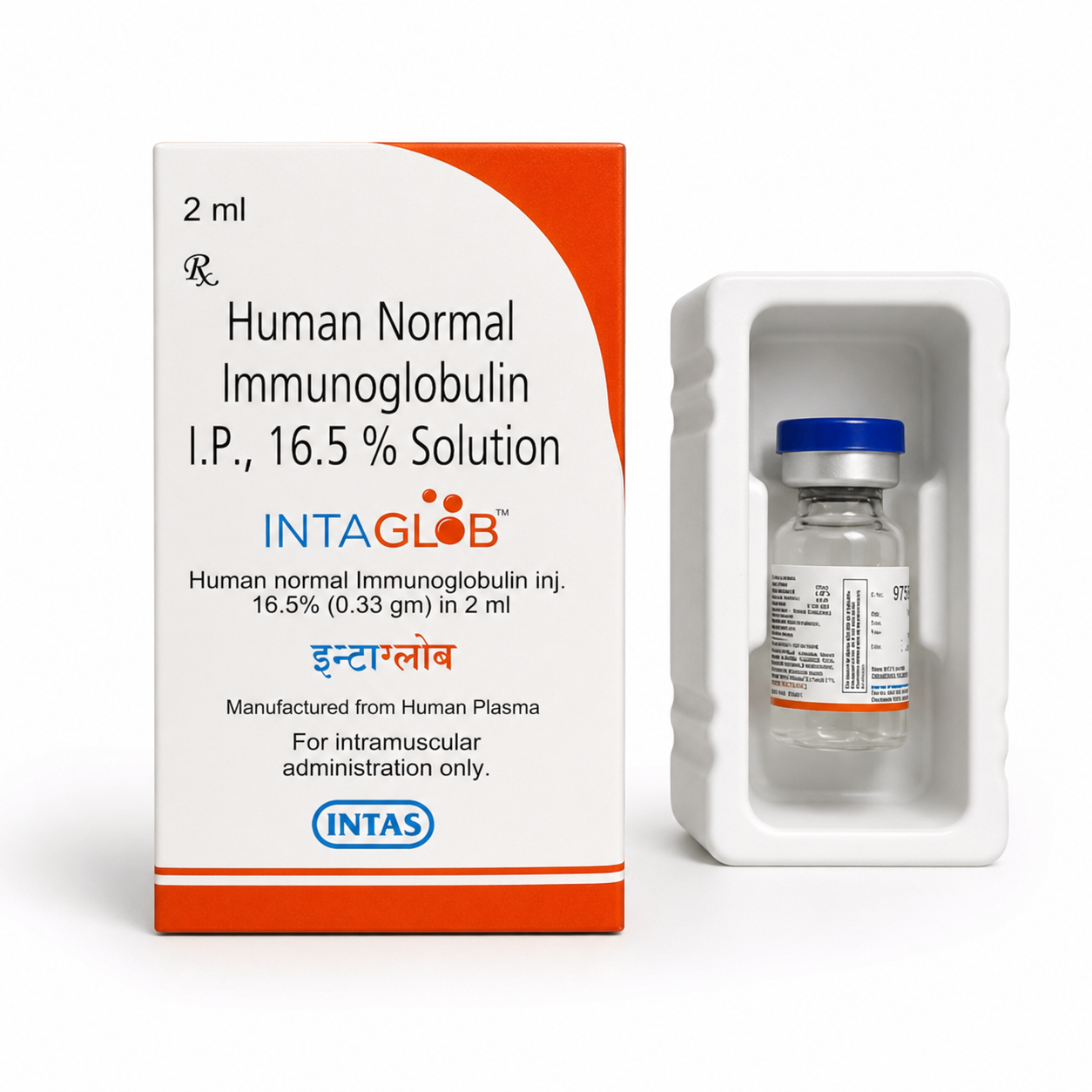
1. What is Intaglob 16.5% Injection?
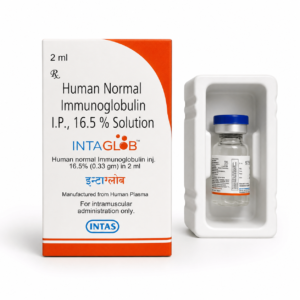
Intaglob 16.5% Injection is a human normal immunoglobulin preparation containing Human Normal Immunoglobulin 16.5% w/v. The product shown is supplied as a 2 ml vial containing approximately 0.33 g of immunoglobulin and is intended for intramuscular administration. Intas lists INTAGLOB as a human normal immunoglobulin solution for intramuscular use.
Immunoglobulins are antibodies, which are proteins naturally produced by the immune system. They help the body recognize and respond to infectious organisms and other foreign substances. Human normal immunoglobulin is prepared from donated human plasma and provides a concentrated source of antibodies.
Doctors may prescribe normal immunoglobulin preparations when passive antibody protection is required or in specific situations where immunoglobulin treatment is medically appropriate. The exact indication depends on the product’s approved labeling, the patient’s condition, and the clinical judgment of the healthcare professional. Current regulatory guidance recognizes intramuscular human normal immunoglobulin as a distinct class of immunoglobulin products, with uses such as certain prophylactic applications depending on the product’s antibody content and authorization.
Intaglob should not be self-administered or used without medical supervision. Intramuscular immunoglobulin injections must be administered by an appropriately trained healthcare professional.
2. Uses of Intaglob 16.5% Injection
The appropriate use of Intaglob depends on the individual patient’s clinical condition and the specific product authorization. Human normal immunoglobulin preparations may be used for passive antibody protection in selected circumstances.
Potential medically recognized applications of intramuscular human normal immunoglobulin include:
- Providing passive antibody protection when clinically indicated.
- Certain preventive uses against infections when the immunoglobulin preparation has the required specific antibody content.
- Hepatitis A prophylaxis in appropriate situations, where the product meets the required hepatitis A antibody specifications.
- Supporting patients who require immunoglobulin therapy as determined by a qualified healthcare professional.
It is important not to assume that every human normal immunoglobulin product is interchangeable for every indication. Specific immunoglobulins, such as hepatitis B, rabies, tetanus, or varicella-zoster immunoglobulins, are different products and should not be confused with normal immunoglobulin.
This medicine should only be administered under the supervision of a qualified healthcare professional.
3. Benefits of Intaglob 16.5% Injection
Intaglob provides human antibodies that can offer passive immune protection when clinically appropriate. Unlike vaccines, which stimulate the patient’s immune system to develop its own immune response, immunoglobulin supplies ready-made antibodies.
Potential benefits include:
- Provides ready-made antibodies to the body.
- May provide temporary passive immune protection.
- Can be useful in selected prophylactic situations.
- May help provide antibody-mediated protection when immediate passive immunity is required.
- Offers a concentrated human immunoglobulin preparation for intramuscular administration.
The benefits depend on the patient’s medical condition, the antibody content of the preparation, and the reason for treatment. Immunoglobulin should not be considered a universal treatment for infections or a substitute for vaccination where vaccination is appropriate.
4. How Does Intaglob 16.5% Injection Work?
Intaglob contains antibodies known as immunoglobulins, predominantly immunoglobulin G (IgG). These antibodies are obtained from human plasma and can recognize various foreign substances and infectious agents.
After administration, the antibodies can provide passive immunity. This means the patient receives antibodies that have already been produced rather than being required to generate the antibodies independently.
The antibodies may bind to specific targets and support the body’s immune defenses. The exact effect depends on which antibodies are present in the preparation and the medical reason for administration.
Because Intaglob is an intramuscular human normal immunoglobulin product, its clinical role differs from intravenous immunoglobulin (IVIG), subcutaneous immunoglobulin, and disease-specific immunoglobulin preparations.
5. How to Take Intaglob 16.5% Injection
Intaglob is an intramuscular prescription medicine and is not intended to be taken orally.
General safety guidance includes:
- It should be administered by a qualified healthcare professional.
- Use only the amount and schedule prescribed by the treating doctor.
- Do not attempt to inject the medicine yourself.
- Do not change the prescribed treatment schedule without medical advice.
- Tell the healthcare professional about previous reactions to immunoglobulin products.
- The injection must not be administered into a blood vessel. Current EMA guidance specifically states that intramuscular immunoglobulin should be administered by a physician or nurse and should not be given intravascularly.
The appropriate amount is individualized according to the clinical indication, patient characteristics, and applicable product information. Therefore, a fixed Intaglob dosage should not be used without a doctor’s prescription.
6. Intaglob 16.5% Injection Side Effects
Like all medicines, Intaglob 16.5% Injection may cause side effects, although not everyone experiences them.
Common Side Effects
Possible reactions may include:
- Pain or discomfort at the injection site
- Redness or swelling at the injection site
- Headache
- Dizziness
- Nausea
- Fever or chills
- Tiredness
- General discomfort
Mild reactions may settle on their own, but patients should tell their healthcare professional if symptoms are persistent or troublesome.
Serious Side Effects
Rare but potentially serious reactions can occur with human immunoglobulin products. Seek immediate medical attention if symptoms suggest:
- A severe allergic or hypersensitivity reaction
- Difficulty breathing or wheezing
- Significant swelling of the face, lips, tongue, or throat
- Severe dizziness or fainting
- Sudden severe headache or neurological symptoms
- Severe or unusual pain or other concerning symptoms
Patients receiving human normal immunoglobulin for the first time, after a long treatment interval, or after switching products may require particularly careful observation because some adverse reactions can occur more frequently in these circumstances.
If side effects persist or become severe, contact your healthcare provider promptly.
7. Warnings and Precautions
Before receiving Intaglob, tell your doctor about any allergies, previous reactions to immunoglobulin products, and relevant medical conditions.
Allergy
Do not receive the medicine if you have a known hypersensitivity to human immunoglobulin or any ingredient of the particular formulation. Product-specific contraindications should be checked before administration.
Bleeding Disorders
Intramuscular administration may be unsuitable in people with severe thrombocytopenia or other significant disorders of blood clotting. The treating doctor should assess the risks before administration.
Pregnancy and Breastfeeding
If you are pregnant, planning pregnancy, or breastfeeding, inform your doctor before treatment. The decision to use an immunoglobulin product should be based on the expected clinical benefit and individual circumstances.
Kidney and Liver Conditions
Inform your doctor about kidney or liver disease. Your healthcare professional can determine whether any additional precautions or monitoring are necessary.
Older Adults
Older patients may have additional medical conditions or take multiple medicines. Their overall medical history should be reviewed before administration.
Alcohol and Driving
There is no general reason to assume that alcohol is compatible with every treatment situation. Discuss alcohol use with the healthcare professional managing your treatment. If you experience dizziness or other symptoms that affect alertness, avoid activities requiring full concentration until you feel well.
8. Drug Interactions
Human normal immunoglobulin may interact with certain medical treatments, and immunoglobulin therapy can also affect the interpretation or effectiveness of some vaccines.
Before receiving Intaglob, inform your healthcare provider about:
- Prescription medicines
- Non-prescription or OTC medicines
- Vaccines
- Vitamins
- Herbal products
- Other immunoglobulin preparations
Do not assume that different immunoglobulin products can be substituted for one another. The indication, antibody content, concentration, and route of administration may differ.
9. Storage Instructions
Storage requirements should always follow the product packaging and approved prescribing information.
For this type of immunoglobulin product, appropriate cold-chain storage may be required. A current pharmacy listing for Intaglob 16.5% Injection reports refrigeration at 2°C–8°C and advises not to freeze, but the product’s current package insert should be followed for the exact storage requirements.
General precautions include:
- Keep the medicine in its recommended storage conditions.
- Protect it from inappropriate heat and direct sunlight.
- Do not freeze unless the official product information specifically permits it.
- Keep it out of the reach of children.
- Do not use the product after its expiry date.
- Do not use a vial if its appearance or container is damaged or abnormal.
- Maintain appropriate storage conditions during transportation.
10. Intaglob 16.5% Injection Price and Manufacturer
The Intaglob 16.5% Injection price can vary according to the pharmacy, location, applicable taxes, supply conditions, and batch. Online medicine listings may show different prices, so a displayed price should not be treated as a universal or permanent price.
The product is manufactured by Intas Pharmaceuticals Ltd. Intas’s official product listing identifies INTAGLOB as human normal immunoglobulin for intramuscular use, supplied in a 2 ml pack.
Because Intaglob is a prescription medicine, its supply and administration should be handled through appropriate healthcare and pharmacy channels rather than self-medication.
11. Frequently Asked Questions
1. What is Intaglob 16.5% Injection used for?
Intaglob contains human normal immunoglobulin and provides ready-made antibodies. Depending on the specific product authorization and clinical circumstances, intramuscular normal immunoglobulin may be used for passive antibody protection and selected prophylactic indications. The exact reason for treatment should always be confirmed by the prescribing healthcare professional.
2. How does Intaglob work?
Intaglob supplies human antibodies, mainly IgG, obtained from human plasma. These antibodies can provide passive immunity by helping recognize and respond to specific foreign substances or infectious agents. Its effect depends on the antibody content of the preparation and the reason it has been prescribed.
3. Is Intaglob safe?
Intaglob can be used safely when the appropriate product is selected and administered under professional medical supervision. However, immunoglobulin products can cause side effects and, rarely, serious hypersensitivity reactions. Patients should inform their healthcare professional about allergies, previous immunoglobulin reactions, bleeding disorders, and other significant medical conditions.
4. Can Intaglob be used long term?
The duration of immunoglobulin treatment depends entirely on the medical indication. Intramuscular normal immunoglobulin is not a medicine that should automatically be continued for a fixed period. A doctor must determine whether treatment is necessary, how frequently it should be given, and when it should be reviewed.
5. What happens if I miss an Intaglob appointment?
Because Intaglob is administered by a healthcare professional, a missed dose or appointment should be discussed with the treating healthcare provider. Do not attempt to compensate by arranging an additional injection yourself. The appropriate next step depends on why the immunoglobulin was prescribed and the timing of the missed treatment.
6. Can Intaglob be stopped suddenly?
Do not change or discontinue an immunoglobulin treatment plan without speaking with your healthcare professional. Some uses are based on a specific exposure or preventive need, while others may require a planned treatment schedule. Your doctor can determine whether further treatment is required.
7. Can Intaglob be taken with food?
Intaglob is an injection administered into a muscle, so food does not affect its administration in the same way it can affect oral medicines. It should be given by an appropriately trained healthcare professional according to the prescribed medical plan.
8. What are the common Intaglob side effects?
Possible side effects can include injection-site discomfort, headache, dizziness, nausea, fever, chills, tiredness, or general discomfort. Most reactions may be mild, but serious allergic reactions can rarely occur. Any severe, persistent, or unusual symptoms should be reported to a healthcare professional promptly.
9. Who should avoid Intaglob?
People with known hypersensitivity to human immunoglobulin or relevant ingredients should not receive the product. Intramuscular administration may also be unsuitable for people with severe thrombocytopenia or significant bleeding disorders. A doctor should review the patient’s medical history before administration.
10. How should Intaglob be stored?
Intaglob should be stored according to the manufacturer’s current package information. A current medicine listing reports refrigerated storage at 2°C–8°C and advises not to freeze. Patients should follow the storage instructions supplied with their specific pack and should not use an expired or improperly stored product.
Disclaimer
This information about Intaglob 16.5% Injection is provided for educational purposes only and should not be considered medical advice, diagnosis, or a substitute for professional healthcare. The appropriate indication, dosage, administration schedule, and duration of treatment can vary between patients.
Do not self-medicate or attempt to administer this prescription injection without appropriate medical supervision. Always follow the prescription and instructions provided by your qualified healthcare professional. Individual responses to immunoglobulin treatment may vary.
Important: Product indications, composition, storage conditions, availability, and pricing can change. Always refer to the latest approved product information and packaging supplied with the medicine.
Reviews
There are no reviews yet.